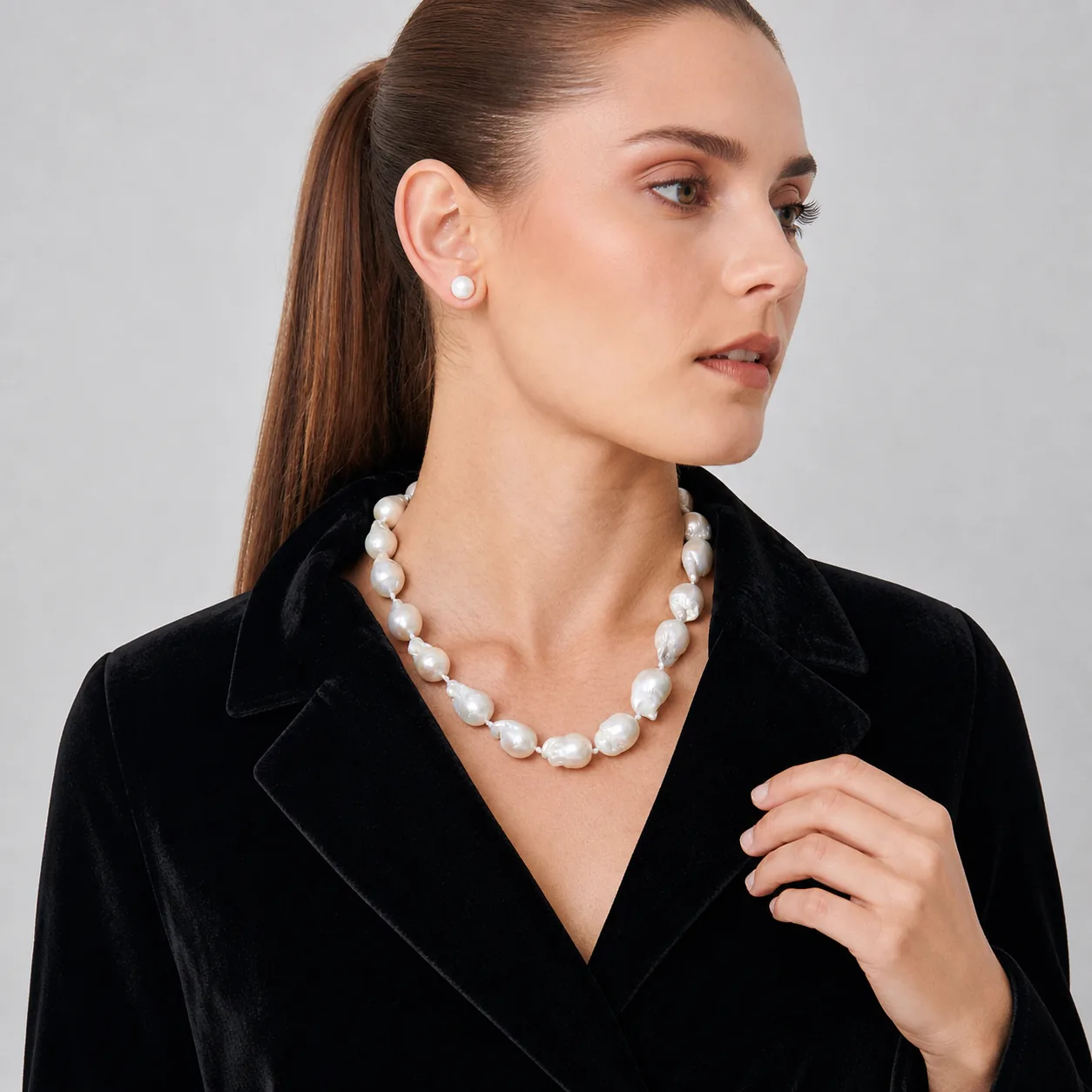
Baroque pearls are valued for free-form outlines, organic texture and one-of-a-kind character. They allow jewelry brands to create recognizable designs without depending on perfectly uniform components.
What makes a pearl baroque
The term baroque covers pearls that do not form a regular round shape. They may be drop-like, elongated, flat or sculptural. Natural ridges and growth patterns make every piece slightly different.
Strong applications
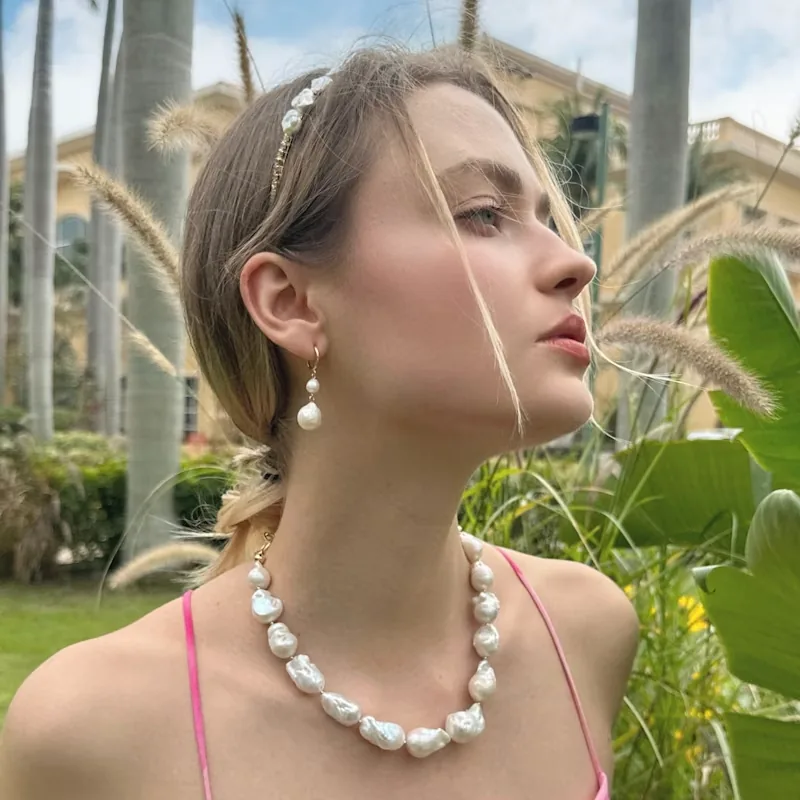
Large, complete shapes suit single pendants and drop earrings. Smaller pieces work in asymmetrical pairs, bracelets and mixed strands. Flat or sculptural pearls can become focal points in rings and artistic settings.
Controlling a wholesale batch
Consistency does not mean making every baroque pearl identical. Define an acceptable family of outlines, dimensions, thickness, color, luster and surface quality. State whether earring pairs should be closely matched or deliberately asymmetric.
Setting customer expectations
Show multiple angles and explain natural variation on the product page. Accurate presentation turns irregularity into a design benefit and reduces returns from customers who might otherwise mistake natural features for defects.
2026 market signal: organic shapes remain relevant
Current pearl discussions continue to treat irregularity as a design feature rather than a defect. For brands, the durable opportunity is not simply calling a product “trending”; it is pairing strong luster with a controlled family of baroque shapes, multi-angle photography and an approved variation range. See the 2026 pearl jewelry trend and test-buy guide.
Need current pearl samples or a quote?
Send Tony your required pearl type, size, color, quality, quantity and intended use. We can share current batch photos, sample options and wholesale pricing.
Ask Tony on WhatsApp