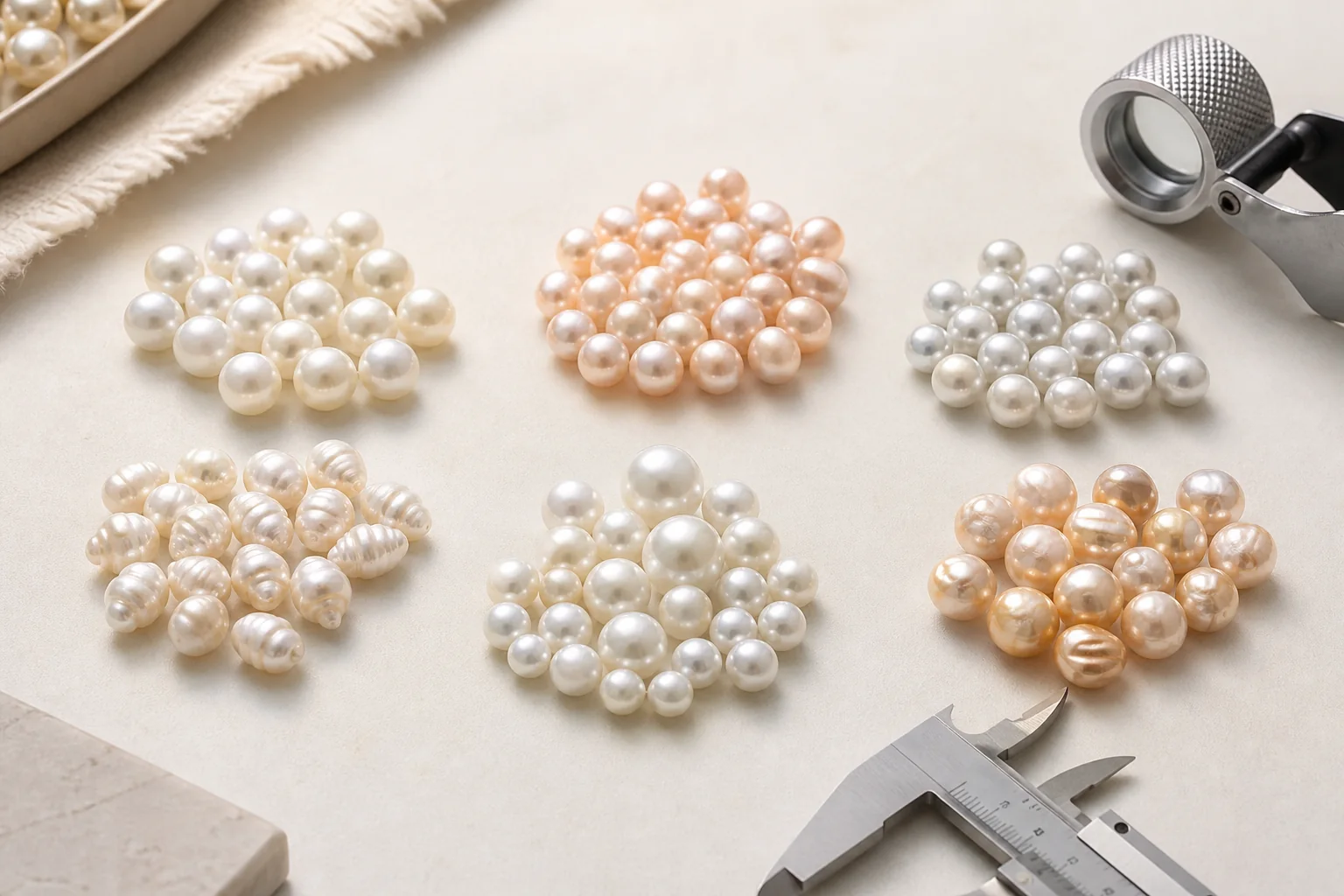
Freshwater pearl grades are not governed by one universal international scale. A reliable purchase specification should therefore describe measurable and visible characteristics instead of relying only on labels such as A, AA or AAA.
1. Luster
High-luster pearls show bright reflections with relatively sharp edges and a sense of depth. Dull pearls appear chalky or flat. Compare samples under the same neutral lighting, because warm showroom lights and phone processing can change how luster appears.
2. Surface quality
Cultured pearls normally show growth marks, pinpoints, small pits or ridges. Define how many features are acceptable, how visible they may be and whether they can appear on the front-facing area of a finished piece.
3. Shape and size
Round pearls are relatively scarce, while near-round, oval, button and baroque pearls offer different design values. Record diameter ranges in millimeters and specify both length and width for elongated or irregular shapes.
4. Color and matching
Evaluate body color, overtone and orient. For earrings, strands and repeat programs, consistency matters as much as the beauty of an individual pearl. Matching includes color, size, shape, luster and surface quality.
5. Drilling and workmanship
Check hole position, diameter, chipping and cleanliness. Finished jewelry should also be inspected for secure findings, adhesive marks, string tension and functional clasps.
6. Approved samples
Keep a numbered approval sample and, when possible, upper and lower limit samples. These physical references turn subjective descriptions into a standard both buyer and supplier can use during production and inspection.
Need current pearl samples or a quote?
Send Tony your required pearl type, size, color, quality, quantity and intended use. We can share current batch photos, sample options and wholesale pricing.
Ask Tony on WhatsApp