Design the sales kit around buyer decisions
A line sheet is not a reduced consumer catalog. It should answer the wholesale buyer's operational questions: what the item is, how variants differ, how it is packed and ordered, what evidence is available, and which terms require confirmation. Define the audience before choosing fields. A boutique may need retail presentation and reorder quantities, while a private-label buyer needs customization, samples, artwork and specification controls. Keep inspirational brand material separate from the order-critical document so neither purpose overwhelms the other.
Organize necklaces into understandable groups such as core uniform styles, graduated necklaces, baroque signatures, bridal options or layering lengths. Use collection names for navigation but retain descriptive product names. Place contact details, issue date, currency, market or territory, confidentiality note if applicable and a link to full terms where buyers can find them. Do not rely on a sales representative to explain every missing field verbally; undocumented explanations are difficult to repeat across accounts and seasons.
Create one controlled data row for every sellable variant
At minimum, record style name, SKU, sellable variant, freshwater cultured-pearl type, shape, size range, bodycolor, finished length, layout, clasp or relevant metal, package, order unit and identifier when used. State whether the clasp is included in length and whether imagery shows the exact variant. Avoid combining several lengths or colors in one row if buyers must order them separately. A clear variant matrix prevents an attractive image from becoming an ambiguous purchase instruction.
Use consistent units, capitalization and terminology. GS1 standards support structured identification, but the line sheet must still match the brand's product master, barcode and order form. Do not copy an old SKU to a materially changed fixed set or pack count without reviewing the applicable identifier rules. Add a version owner so corrections flow to the website, warehouse and customer-service records instead of creating several slightly different descriptions of the same necklace.
Show cultured-pearl quality without unsupported grades
Use freshwater cultured pearl in material descriptions and disclose relevant treatments. Summarize shape, size, color, luster, surface range and matching in buyer-friendly language, then link to the specification or sample process for precise tolerances. GIA's quality factors provide a useful vocabulary, while FTC guidance supports accurate category wording. Avoid presenting a supplier grade letter as a universal standard or calling cultured pearls natural pearls.
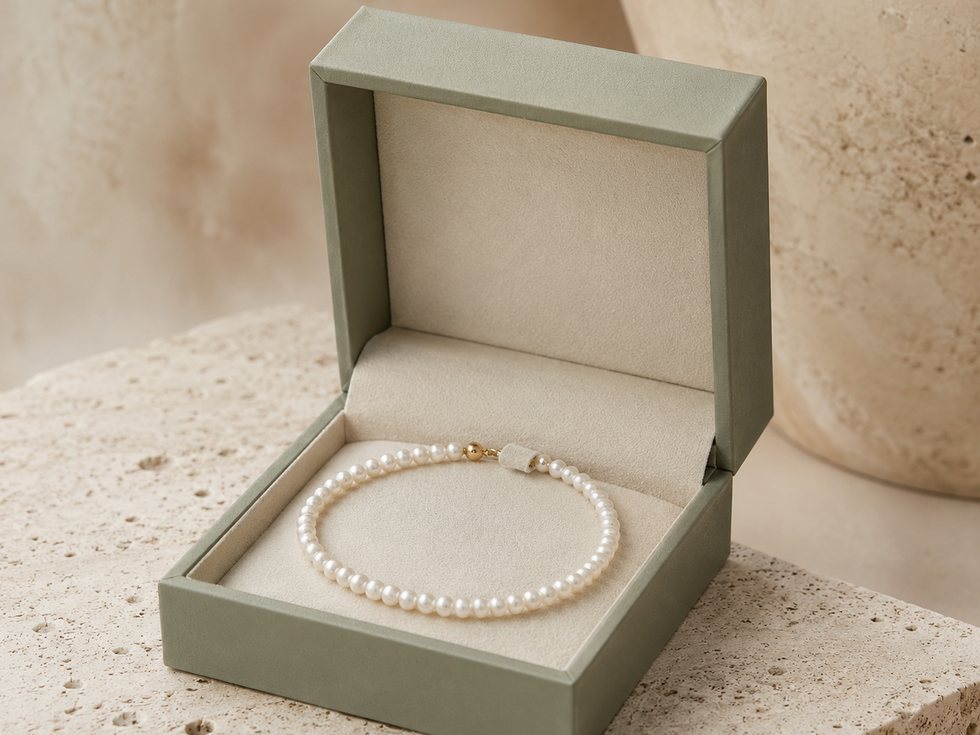
Select images that show the full necklace, scale, closure and representative cultured-pearl character. A styled image can establish brand direction, but buyers also need a neutral product view and close-up. Label samples or images as representative when current lots can vary. Provide a method for requesting batch photographs, video or a physical sample before a large order. Do not retouch away surface characteristics that are permitted in the quoted commercial range.
State order terms without creating stale promises
List the current wholesale currency, unit basis, order minimum structure, sample policy, payment milestones, quote validity and how buyers obtain a confirmed offer. If prices or minimums depend on cultured-pearl size, quality, customization or packaging, say so and route the buyer to a specification-based quotation. Avoid hard-coding freight or duty assumptions that change by shipment and destination. A line sheet can explain the pricing basis without pretending that one old figure remains valid indefinitely.
Separate sample, development and production timing. State what event begins each period, such as receipt of artwork, sample approval, deposit or material confirmation, and mark timing as subject to the confirmed order. For international delivery, name the Incoterm and place in the quotation rather than using vague delivered language. ICC Incoterms allocate specified costs, responsibilities and risk but do not define necklace quality, inspection acceptance or payment terms, which belong in the contract and purchase documents.
Add packaging, customization and evidence modules
Show standard packaging and clearly separate optional private-label services. Record pouch or box, card, care insert, label, pack quantity and shipping carton at the level needed for ordering. For logo tags, clasps, engraving or custom boxes, identify artwork format, development path, applicable minimum or setup to be quoted, and ownership questions. Do not imply exclusivity for a supplier-developed design unless the parties expressly document it.
Create a small evidence module rather than a vague quality badge. It can explain current-lot photos, retained samples, inspection reports, supplier declarations and optional laboratory work, with the scope of each. A photograph does not prove alloy composition or treatment status, and a report on one item does not certify every future lot. Give buyers a named contact and checklist for requesting the evidence appropriate to their risk and destination requirements.
Control distribution, revisions and sales follow-up
Put an issue date and revision on every line sheet and order form. Archive prior versions, record what changed and withdraw links to obsolete files when practical. If a cultured-pearl lot, clasp, package or term changes materially, update affected records and notify active buyers through the agreed channel. Do not silently replace a downloadable PDF while open quotations still cite the earlier revision. Controlled documents let the team answer which information governed a particular order.
Connect the sales kit to a disciplined follow-up process. Record which buyer received which revision, requested samples, approved a specification or needs current-lot evidence. Use questions and objections to improve the next edition, but separate content gaps from product or commercial problems. A complete line sheet will not replace consultation for custom necklaces; it should make that consultation faster, more precise and easier to convert into a quotation and purchase order.
Procurement decision table
| Field group | Include | Source of truth | Update trigger |
|---|---|---|---|
| Product identity | Style, SKU, material and variant | Product master and specification | Material or sellable variant changes |
| Measurements | Length, extender, pearl size and layout | Approved sample and drawing | Fit or construction revision |
| Commercial terms | Unit, currency, minimum, validity and payment path | Current quotation policy | Term or cost basis changes |
| Packaging | Included pack and optional branding | Packaging BOM and artwork | Package or identifier revision |
| Evidence | Samples, lot photos, declarations and inspection options | Quality plan | Supplier, lot or claim changes |
Buyer checklist
- [ ] Define the wholesale audience and decisions the line sheet must support.
- [ ] Give every sellable necklace variant a controlled SKU and data row.
- [ ] Use accurate cultured-pearl terminology, dimensions and quality factors.
- [ ] Provide full-product, scale, closure and representative detail images.
- [ ] State unit, currency, minimum structure, validity and quote pathway.
- [ ] Separate standard packaging from optional private-label development.
- [ ] Explain the scope of samples, batch evidence and inspection options.
- [ ] Issue, archive and distribute revisions through a controlled process.
Frequently asked questions
What belongs on a pearl necklace wholesale line sheet?
Include controlled product identity, cultured-pearl attributes, measurements, construction, variants, images, package, order unit, current terms, sample path and revision information.
Should a wholesale line sheet show fixed prices?
Only when they are current for the stated specification, currency, quantity and validity period. Custom or variable necklace programs may need a specification-based quotation instead.
Can one photo represent every pearl necklace batch?
It can illustrate the approved commercial range, but cultured-pearl lots vary. Use representative labeling and offer current-lot evidence when continuity matters.
Is a line sheet enough to place a private-label order?
Usually not by itself. Convert the selected style into a confirmed specification, sample approvals, quotation, purchase order, artwork and inspection requirements.
Related pearl necklace buying guides
Sources and official references
Use these primary references together with the written product specification and destination-market professional advice.
Turn this guide into a purchase-ready necklace specification
Send Tony Ren your target pearl necklace design, dimensions, quality tolerances, quantity, packaging and destination. We can discuss current-batch evidence, samples and a clearly scoped quotation.