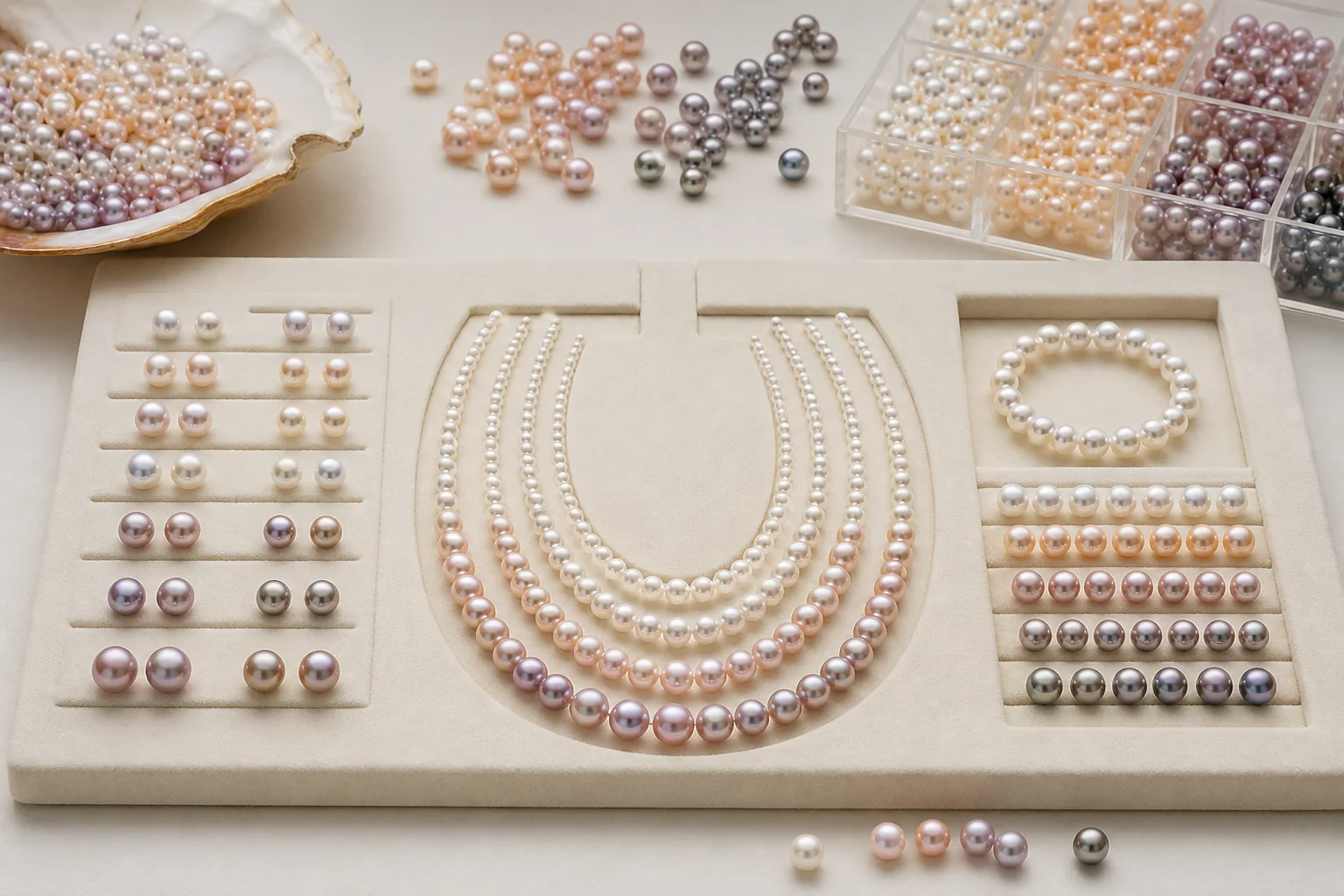
The six matching factors
Begin with measured size and overall shape, then compare body color, overtone, reflection strength, surface character and drilling orientation. Two pearls may share a diameter but look mismatched if one is warmer, more reflective or visibly flatter. Evaluate all factors together at normal viewing distance and under close inspection.
Matching earring pairs
Studs and drops are seen side by side, so differences are easy to notice. Define diameter tolerance, roundness, color family and acceptable surface features on the visible face. For half-drilled pearls, confirm that both holes create the same forward orientation after mounting.
Building a balanced strand
A strand does not require every pearl to be identical, but changes should feel gradual. Place the strongest focal pearls at the front and manage small variations toward the back when the design allows. Check the strand in a straight line and in its natural necklace curve because alignment can change the visual result.
Matching repeat production
Keep an approved physical sample and photograph it with neutral lighting and a color reference. Written grade names alone are not enough because supplier grading systems differ. For repeat programs, define an acceptable range using upper and lower limit samples and compare each batch before assembly.
Cost and yield implications
Tighter matching reduces usable yield from a mixed lot and increases sorting time. Decide where precision creates customer value: bridal studs may need close matching, while organic baroque collections can use controlled variation. State the commercial priority so the supplier can balance appearance, availability and cost.
Frequently asked questions
Do matched pearls need to be identical?
No cultured pearls are perfectly identical; the goal is a visually harmonious match within agreed tolerances.
Which product needs the closest matching?
Earring pairs usually need the tightest match because the two pearls are viewed together.
How can repeat batches stay consistent?
Use retained approval and limit samples, controlled lighting and written tolerances for the main matching factors.
Related freshwater pearl guides
Need current pearl samples or a quote?
Send Tony your required pearl type, size, color, quality, quantity and intended use. We can share current batch photos, sample options and wholesale pricing.
Ask Tony on WhatsApp