Why this is a product-development opportunity
Pearls now appear across tailored, casual and streetwear wardrobes rather than only formal or bridal categories. Reddit discussion provides a useful language signal: a long-running men's fashion inspiration thread remains highly engaged, while a recent buyer asked specifically for a white 7–8 mm necklace in a 22–24 inch length. These conversations do not prove total market size, but they reveal concrete product questions that generic trend reports often miss.
For a brand, the opportunity is broader than a “men's version” of an existing necklace. A gender-neutral program can be organized by silhouette, scale and styling behavior, allowing shoppers to choose the fit they want without relying on a narrow gender rule.
Start with size and visual scale
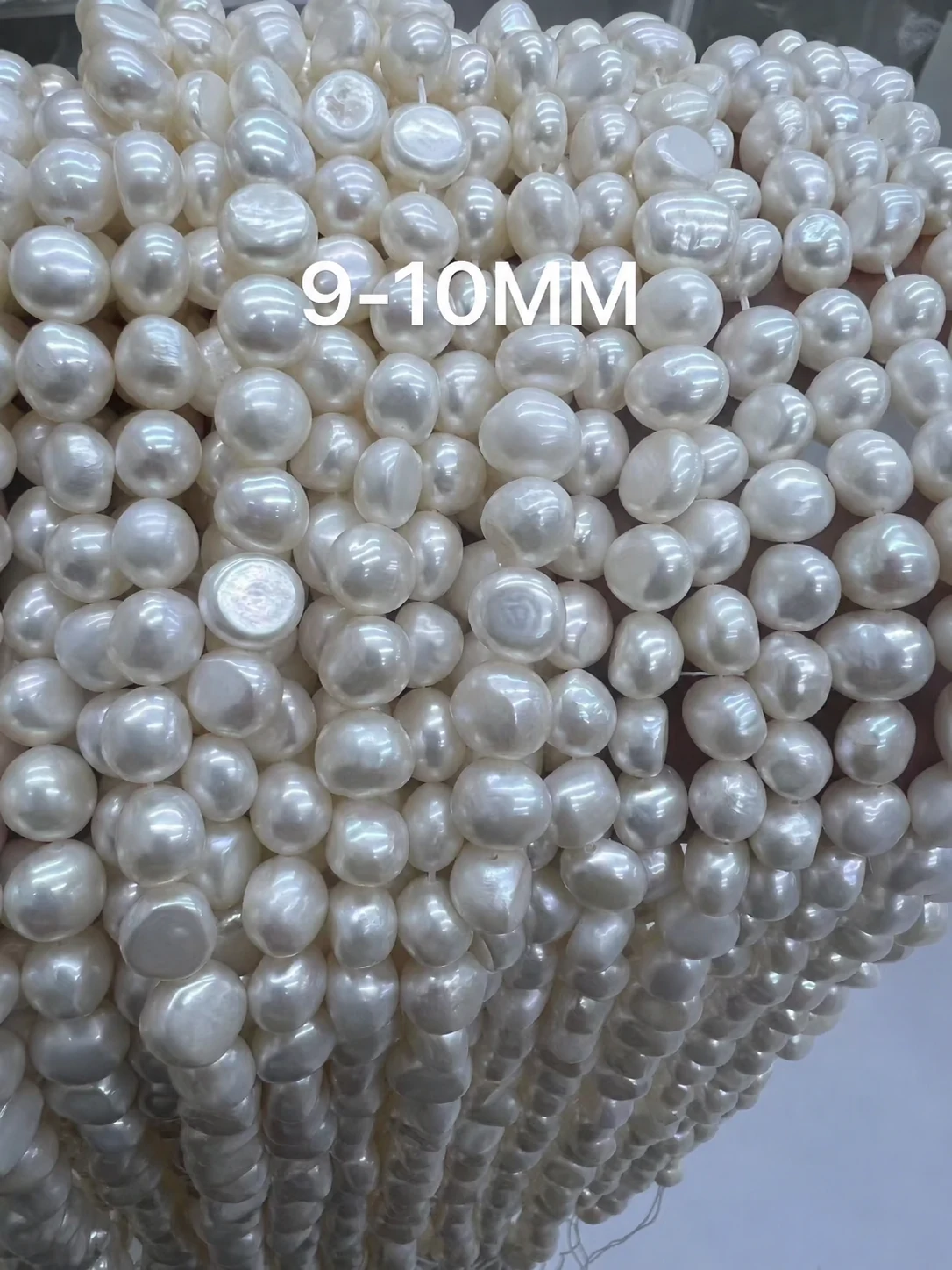
Pearl diameter changes the visual weight of a necklace. A 6–8 mm strand can feel clean and versatile, especially with a simple clasp and controlled matching. An 8–11 mm strand becomes more visible and works well for a statement or baroque direction. Smaller seed or rice pearls can support layered and mixed-material designs.
Size cannot be approved in isolation. Large baroque pearls may be lighter or heavier than expected depending on shape and strand count, while highly round pearls create a more formal visual rhythm. Request a completed sample and measured finished weight rather than estimating comfort from diameter alone.
| Collection direction | Starting specification | Product-development notes |
|---|---|---|
| Minimal core | 6–8 mm, near-round, white or cream, 18–22 in | Prioritize even luster, clean drape and a low-profile clasp. |
| Relaxed statement | 8–11 mm, baroque or oval, 20–24 in | Approve a controlled family of shapes rather than requiring identical pearls. |
| Layering strand | 3–6 mm rice, potato or near-round, 18–24 in | Test beside chains and pendants; confirm hole size and abrasion points. |
| Mixed-material style | Freshwater pearls with chain, cord or metal spacers | Check metal contact, thread protection, balance, color and finish durability. |
Choose finished length by fit, not category name
“Choker,” “princess” and other traditional names are not precise enough for production. Specify the finished end-to-end length, whether the clasp is included, and the allowed tolerance. An 18–20 inch necklace may sit near the base of the neck on one wearer but higher on another. A 22–24 inch option generally creates a lower, more relaxed position and can work over a T-shirt, knitwear or open collar.
Sample at least two lengths and photograph them on different neck and shoulder proportions. When knots are added between pearls, the same pearl count can produce a longer necklace, so approve finished length independently from count.
Round, baroque or mixed?
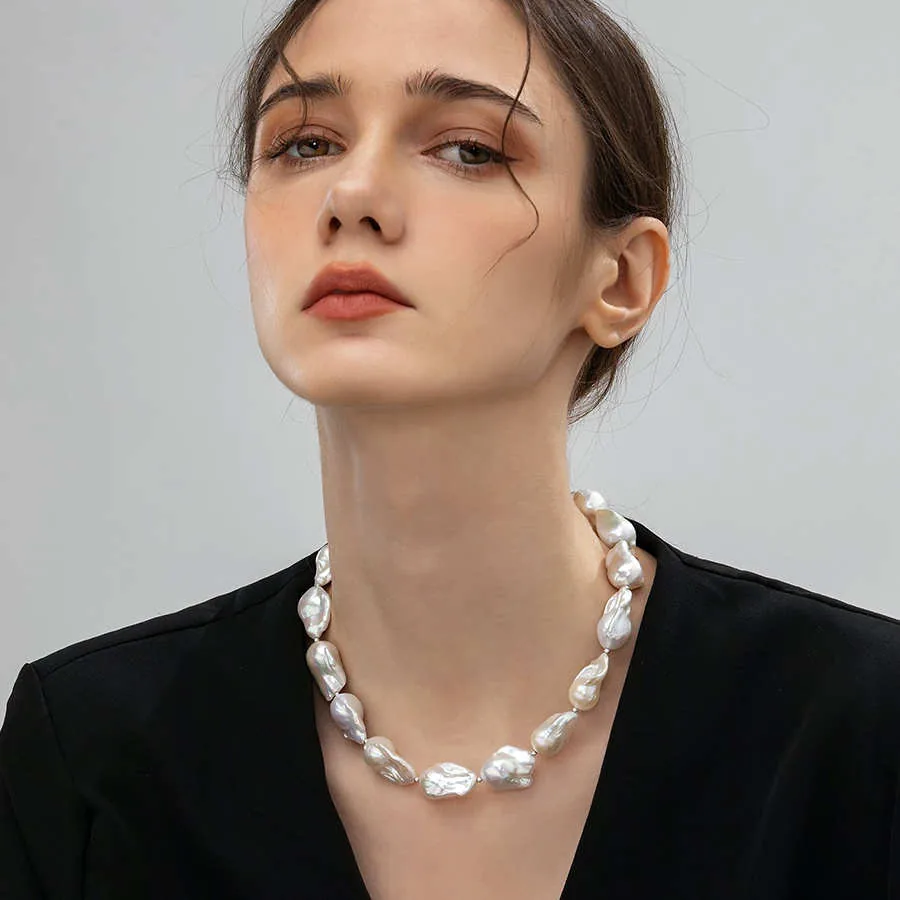
Round and near-round pearls create a consistent, graphic line. Baroque pearls introduce irregularity and can make a necklace feel less traditional. Rice and oval shapes create a narrower rhythm, while mixed sizes can move the product toward a more artisanal or streetwear look.
For baroque production, define acceptable length, width, thickness, luster, color family and surface tolerance. “Random baroque” is not a sufficient repeat-order standard. A batch should look intentionally related even though individual pearls differ.
Construction and clasp details matter
A clasp is both a functional component and part of the visual language. Lobster clasps and simple rings support familiar use; toggle and carabiner-inspired forms can become a design feature. Confirm metal, plating, dimensions, closure force, logo placement and the way the end pearls are protected.
Individually knotted construction reduces direct pearl-to-pearl rubbing and limits loss if the thread breaks, but it adds labor and length. Unknotted or wire-based construction may suit temporary strands and some fashion styles. Test drape, gaps, thread visibility and end connections after the sample has rested.
Color and treatment disclosure
White, cream, peach, pink and lavender cultured freshwater pearls can support a broad palette. Dark gray, black, bright blue, green or strongly saturated colors are commonly treated in freshwater products and should not be presented as though they were naturally dark Tahitian pearls. Confirm treatment with the supplier and give customers care information that matches the material.
Build a useful wholesale sample set
- Two scale options: one restrained and one statement pearl size.
- Two finished lengths: a closer fit and a lower fit.
- Two shape families: round or near-round plus a controlled baroque option.
- Construction choices: selected thread, knotting method, clasp and end finishing.
- Evidence: measured weight, color/treatment declaration, batch photos and written tolerances.
- Packaging fit: verify that the necklace rests without crushing, tangling or excess movement.
Merchandising without stereotypes
Use dimensions and styling information shoppers can act on: model neck circumference, necklace length, pearl diameter, finished weight and clasp size. Show the same product with a T-shirt, shirt, knitwear and jacket rather than assigning one narrow occasion. Offer length choices or an extender where the design allows.
A compact launch can include a minimal core strand, a larger baroque statement, and a mixed-material test style. Review sell-through, return reasons and customer language before expanding colors or sizes. This keeps the trend test commercially disciplined.
Frequently asked questions
What pearl size is best for a men's necklace?
There is no universal gender rule. For initial sampling, 6–8 mm provides a versatile core scale, while 8–11 mm creates a stronger statement. Shape, length and garment styling change how the same diameter reads.
Is 22 inches a good pearl necklace length?
It can be a practical relaxed length, but fit varies. Sample 20, 22 and 24 inches or use an adjustable construction, then record the final end-to-end measurement and tolerance.
Are baroque pearls good for gender-neutral collections?
Yes. Their organic outline works well in casual, artistic and mixed-material designs. Define a controlled shape family so bulk units remain recognizable as one SKU.
Should a men's pearl necklace be knotted?
Not necessarily. Choose knotting based on pearl value, abrasion risk, drape, design and target price. Approve thread, knot size, tension and finished length when knotting is used.
Related product and sourcing guides
- Freshwater pearl necklace length guide
- Knotted vs. unknotted pearl strands
- Baroque freshwater pearl design guide
- OEM freshwater pearl jewelry
- Pearl jewelry findings and metals guide
Discussion signals used for this guide
This product brief was informed by buyer language in Reddit discussions including Inspiration: Pearls and a recent request for a 7–8 mm, 22–24 inch pearl necklace. Reddit engagement is a qualitative demand signal, not a substitute for sales data, fit testing or batch approval.
Develop a men's or gender-neutral sample set
Send the desired pearl size, shape, color, finished length, clasp, quantity and target retail position. We can prepare current batch options and sample recommendations.
Discuss the Collection