Start with an accurate product name and disclosure
Use freshwater cultured pearl in the product name when that is the material. Natural pearl, cultured pearl and imitation pearl are distinct categories, and FTC guidance advises that cultured should qualify pearl in advertising. Add shape, approximate size range, necklace type or distinctive construction only when those details help identification. Avoid stuffing every attribute into the title or using unsupported superlatives. The full description and structured attributes should carry the detail that the shopper and downstream channel need.
State known treatment information and color origin accurately. Natural color and natural pearl are not synonyms: the first can describe an untreated bodycolor while the second identifies a pearl formed without human intervention. Keep the supplier declaration and approved wording in master data so marketplace feeds, ads, line sheets and packaging do not drift. If a point is not verified, do not convert silence into an untreated, certified or hypoallergenic claim. Escalate higher-risk material and treatment questions for qualified review.
Give measurements that support fit and comparison
List finished necklace length in a stated unit and define whether the clasp is included. For adjustable products, show base and extended length. Record cultured-pearl size as a range and identify relevant dimensions for non-round shapes. Add pendant drop, extender, clasp dimensions, strand count and approximate weight when they affect customer choice. Use consistent units and symbols, while the product specification should define how each measurement is taken and rounded.
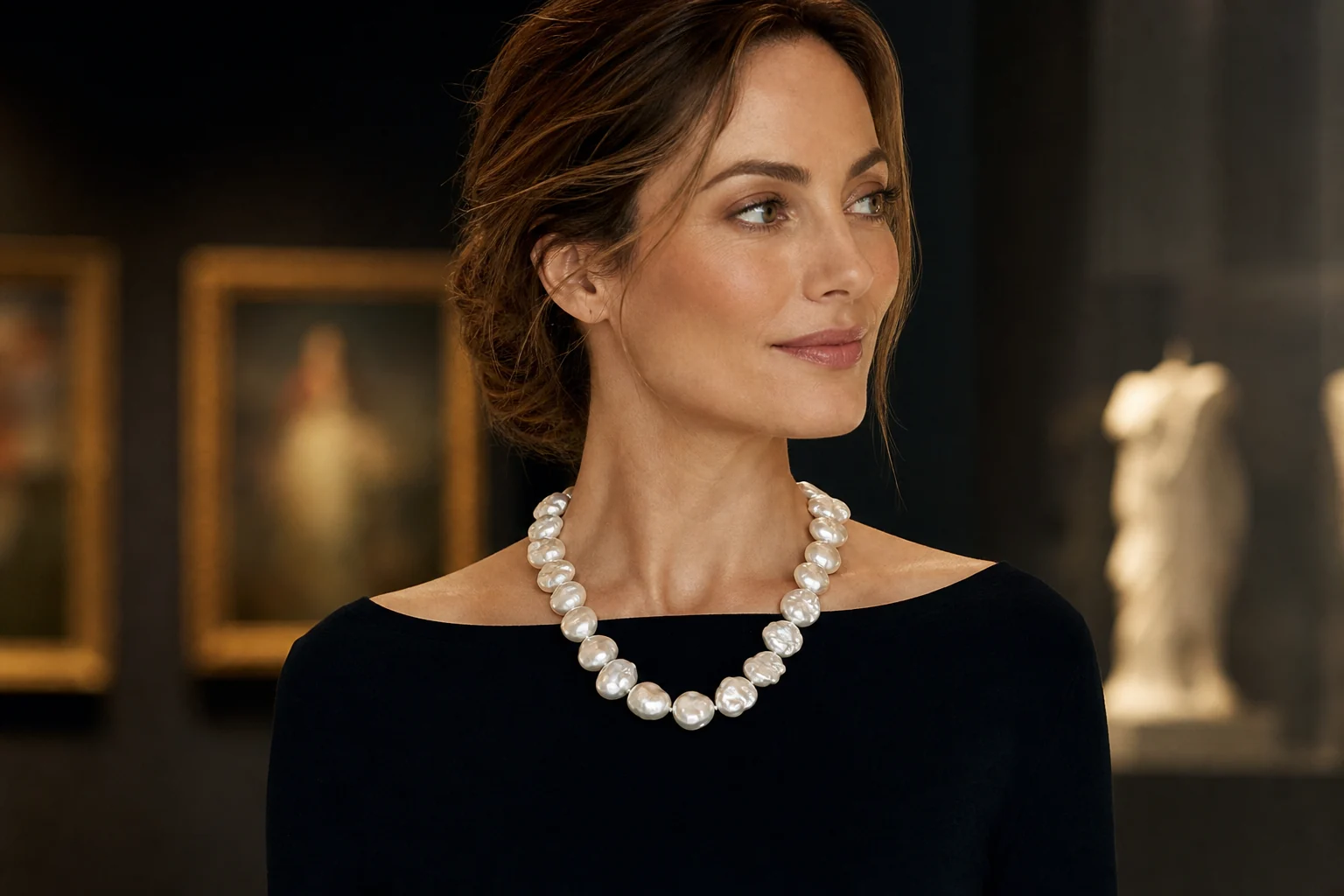
Translate numbers into scale without replacing them. Use on-body or mannequin views, a clear ruler or dimension graphic, and close-ups that preserve realistic proportions. State model or display context when it matters, but do not imply that one body represents universal fit. A cropped hero image may make pearl size and necklace length impossible to judge. Connect every image to the named variant so customers do not select a short white necklace while viewing a longer pink or baroque version.
Photograph color, luster, surface and construction honestly
Create a repeatable image set: full necklace on a neutral background, closure and end finishing, cultured-pearl close-up, side or drape view, packaging and representative on-body scale. Use controlled neutral lighting and color management, then disclose that screens and lighting can affect appearance. Do not remove surface features that are present in the approved commercial range or composite a level of matching that the shipped lot cannot support. The goal is useful evidence, not a laboratory identity result.
Alt text should describe the image purpose and visible product rather than repeat a keyword list. W3C accessibility guidance treats text alternatives as a way to convey the function or information of an image. A useful example identifies the necklace length or layout shown, while decorative imagery can use appropriate empty alternatives under the site's implementation rules. Keep image filenames, captions and variant assignments controlled so updates do not leave obsolete product photos attached to a changed specification.
Control variants, identifiers and inventory records
Give every sellable variation a consistent SKU and product-data record. Length, pearl size, bodycolor, clasp, metal color, pack count or fixed set composition may change the sellable identity. GS1 provides rules for assigning and managing identifiers; the brand should apply the relevant standard and channel requirements rather than reusing an identifier because two necklaces look similar. Parent-child relationships can organize navigation, but each child must connect to its correct price, images, stock and fulfillment data.
Keep batch or lot information beneath the sellable SKU when cultured-pearl continuity matters. Customers normally buy the SKU, while operations may need to segregate different pearl lots, inspection status and packaging revisions. Do not expose internal lot complexity as a confusing variant unless it changes the customer promise. Instead, approve visual compatibility, retain references and update imagery when a new lot no longer represents the displayed range. This balances honest presentation with manageable catalog structure.
Explain construction, care, packaging and fulfillment
Describe stringing, knotting, clasp, extender, relevant metal and assembly features at the evidence level available. A visual inspection cannot prove alloy composition or plating performance. Explain whether knots appear between each pearl, how the closure works and what is included in the package. If the necklace uses a custom or unusual clasp, add a short operation image or video. Avoid durability promises that have not been linked to a defined test and production specification.
GIA recommends gentle pearl care and protection from harsh chemicals, abrasion and excessive exposure. Adapt care to the full necklace, including thread, adhesive and metal, and place the same approved instructions on the product page and care card. Show the retail package if it is part of the offer, and ensure fulfillment uses that revision. Packaging should retain the necklace without tangling or pearl-to-metal rubbing. A gift-ready claim should describe what the customer actually receives.
Audit the live page against orders and returns
Before launch, compare the live page with the approved sample, specification, product identifier, inventory record, barcode, packing instruction and customer-service script. Test each variant selection, image change and cart label on desktop and mobile. Check that measurements remain readable and tables do not overflow. Archive screenshots or exported copy by revision so a team can determine what customers saw when a return or claim occurred.
Review search terms, questions, returns and reviews for evidence of misunderstanding. Separate size or fit confusion from cultured-pearl appearance, clasp function, damage, late delivery and preference. Improve measurement graphics or wording when content is the cause; correct production or fulfillment when the shipped item is the cause. Do not solve a batch mismatch by quietly editing the page after orders are placed. Preserve the prior record, control affected stock and communicate material changes through the appropriate customer process.
Procurement decision table
| Page element | Required information | Operational source | Common failure |
|---|---|---|---|
| Product name | Freshwater cultured pearl and useful style identity | Approved material declaration | Cultured material is called natural pearl |
| Measurements | Finished length, extender and pearl size range | Controlled specification | Fit is left to photography |
| Images | Full product, scale, detail, closure and package | Approved sample and current lot | Images show the wrong variant |
| Variants | SKU, identifier, images, stock and pack data | Product master and inventory | Parent data leaks across children |
| Care and package | Handling, included items and fulfillment revision | Care standard and packing instruction | Marketing differs from shipped contents |
Buyer checklist
- [ ] Use freshwater cultured pearl terminology and verified treatment wording.
- [ ] State finished necklace length, clasp inclusion and extender range.
- [ ] Record pearl dimensions, layout, construction, findings and approximate weight.
- [ ] Provide full-product, scale, detail, closure and packaging images.
- [ ] Map each sellable variant to its SKU, identifier, images and inventory.
- [ ] Use accessible alt text that describes image information and function.
- [ ] Align care and package descriptions with the fulfilled product revision.
- [ ] Audit live content against returns, questions and controlled product records.
Frequently asked questions
Should an online necklace title say freshwater pearl or cultured pearl?
Use freshwater cultured pearl when that is the material. It accurately identifies both the environment and cultured origin and avoids confusion with rare natural pearls.
What necklace measurements should an e-commerce page show?
Show finished length, whether the clasp is included, extender range, cultured-pearl size range, strand count and any pendant or clasp dimension that affects fit.
Can pearl photographs guarantee exact color?
No. Controlled photography should represent the approved range, but lighting and displays vary and cultured-pearl lots have inherent variation. Use current-lot controls and clear disclosure.
When does a pearl necklace variant need a different identifier?
Apply the relevant GS1 and channel rules when a sellable product changes. Length, size, color, pack count or fixed composition can affect product identity.
Related pearl necklace buying guides
Sources and official references
Use these primary references together with the written product specification and destination-market professional advice.
Turn this guide into a purchase-ready necklace specification
Send Tony Ren your target pearl necklace design, dimensions, quality tolerances, quantity, packaging and destination. We can discuss current-batch evidence, samples and a clearly scoped quotation.