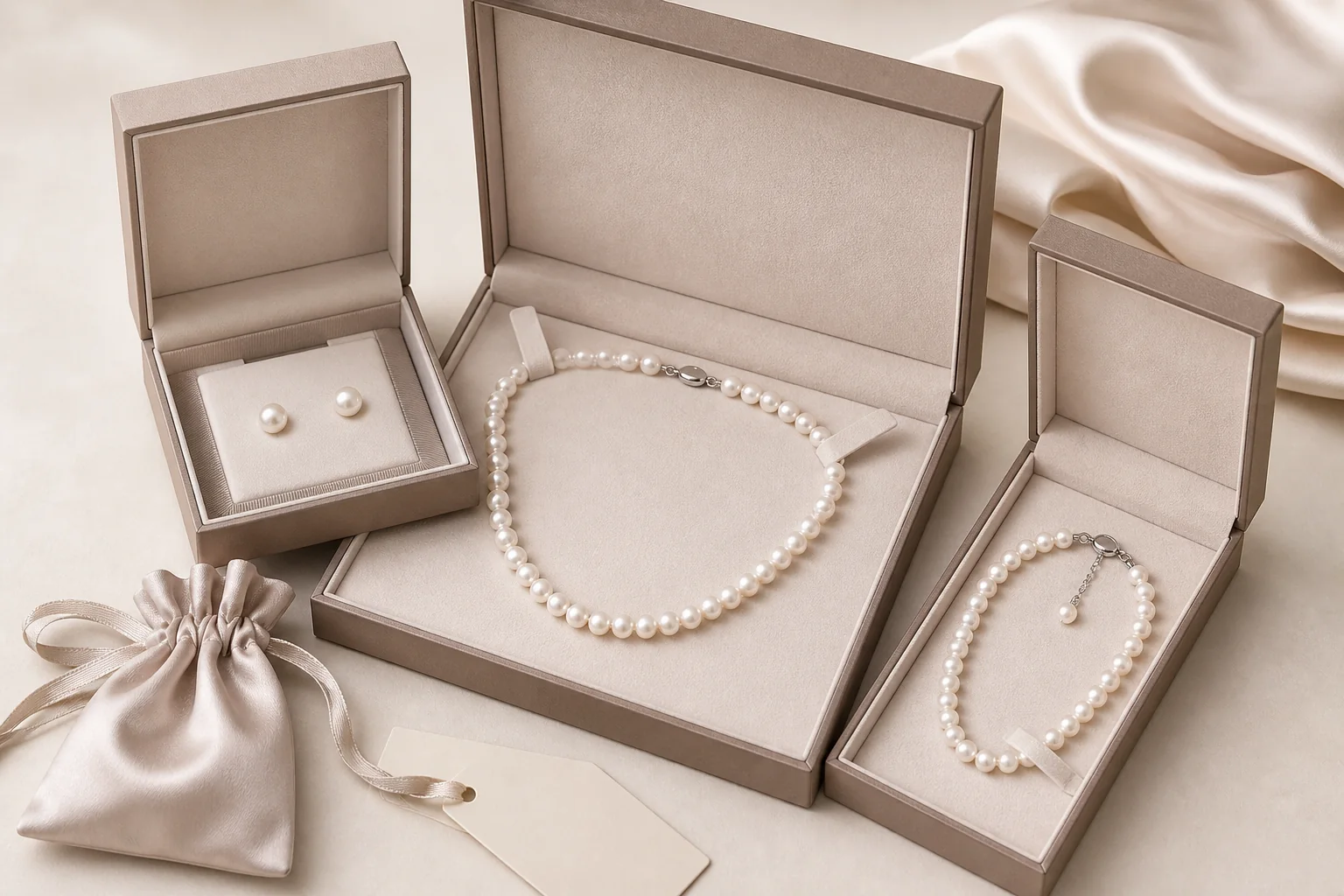
Map the complete fulfillment journey
Begin with the route from factory packing to export carton, inbound warehouse, fulfillment pick, parcel carrier and customer opening. Identify every transfer, storage condition and repacking step. A box designed only for a showroom may fail when placed in a soft mailer or handled by automated sorting. Record product dimensions, weight, fragile points, metal components and the expected parcel configuration. Packaging should be designed for the actual route, not for a generic shipping concept.
Clarify whether the factory delivers finished retail units or bulk jewelry that a fulfillment center repacks. Name the owner of barcode application, inserts, country or material statements required by the buyer, carton labels and final quality check. If multiple channels use different packaging, assign distinct versions and SKUs where appropriate. A clear handoff prevents double labeling, missing care cards and inventory that is physically correct but cannot be received or listed.
Protect pearls from abrasion and chemicals
Pearl nacre can be scratched by metal findings, rough inserts and other jewelry. Separate clasps, chains, posts and charms from pearl surfaces using a soft, non-shedding holder, sleeve or fixed compartment. Avoid excessive pressure that can mark surfaces or strain thread. Keep adhesives, inks and coatings away from direct contact unless compatibility has been reviewed. The product should remain clean and dry to the touch through storage and transit.
Choose materials that do not release dust, fibers or strong odors onto the jewelry. Make sure anti-tarnish components intended for metal do not rub against pearls. For earrings, secure each piece so posts do not cross and backs cannot detach. For necklaces, control the chain or strand without tight bends. Packaging instructions should show exactly how the item is placed; otherwise different packers may create different risks with the same components.
Control tangling, movement and presentation
A necklace or bracelet should be retained at several points so it cannot become a knot during vibration. Use slots, tabs, ties or pouches that hold the product without cutting thread or compressing pearls. Test how the clasp and extender move when the pack is shaken and inverted. For sets, separate pieces so earrings or bracelets do not strike the necklace. Photograph the approved pack-out from front, back and closed positions for production instructions.
Opening experience matters, but it should follow protection and repeatability. The customer should see the product in the intended orientation without needing to untangle it. Ensure the jewelry can be removed without tools or excessive force. If protective tissue or sleeves are used, explain their purpose and placement. A premium-looking box cannot compensate for a product that arrives displaced, and overly complex packing can increase labor errors and fulfillment time.
Align retail packs, barcodes and variant data
Assign each sellable variant the correct identifier under the brand owner's product-data policy and applicable channel rules. Match SKU, product name, color, size, barcode and quantity across artwork, purchase order, packing list and warehouse file. Place the barcode on a flat, scannable surface without folds, metallic glare or obstruction. Test scans from production samples rather than assuming artwork output will remain readable after printing and lamination.
Separate mandatory or buyer-required information from marketing copy. Pearl descriptions, treatment disclosures and metal claims should be accurate and supported. Check destination-market and marketplace rules with qualified advisers because requirements vary. If the product or pack changes, review whether the identifier must change under GS1 guidance. Do not reuse a barcode merely because two items look similar; receiving and customer-service systems depend on exact variant identity.
Test the parcel, not only the jewelry box
Place the retail unit in its actual mailer or shipping carton with the intended void fill, then run handling tests appropriate to the route. Useful development checks include repeated drops from defined orientations, vibration or shake exposure, compression, edge impacts and a review after temperature or humidity conditions relevant to storage. The test should reveal product movement, crushed corners, loose earrings, tangled chains, scuffed pearls and unreadable labels. Record the method so later versions are comparable.
Testing should be risk-based and proportionate, not a claim of universal carrier certification. Use a packaging laboratory when a formal protocol or marketplace requirement applies. Re-test when product weight, box, insert, mailer, carton quantity or carrier route changes. For high-value shipments, consider tamper evidence and a discreet outer pack. Keep the customer-facing brand experience inside while the external parcel remains suitable for normal logistics handling.
Specify export packing and responsibility
At master-carton level, state inner quantity, assortment, carton dimensions, weight limits, void control, moisture protection, marks and packing-list relationship. Confirm whether boxes are shipped assembled or flat and how jewelry units are counted. Use a golden packing sample and photographs at production start. Inspect packed cartons before shipment because late substitutions in tissue, insert thickness or carton strength can undo an approved design.
State the named Incoterms rule and place in the sales contract when using Incoterms, and clarify insurance, carrier booking and documentation separately. Incoterms allocate certain costs, obligations and risk but do not replace a contract of sale or product-quality terms. Work with a freight forwarder or carrier for route-specific requirements. Keep packaging specifications, inspection records and damage reports so future changes address evidence rather than assumptions.
Procurement decision table
| Risk | Design control | Verification |
|---|---|---|
| Pearl abrasion | Separate metal parts and use soft, non-shedding contact materials | Inspect surfaces after handling test |
| Necklace tangling | Retain the strand and isolate clasp or extender | Open parcels after vibration and inversion |
| Earring displacement | Secure each earring and back in defined positions | Check retention after drops |
| Barcode failure | Use correct data, contrast and a flat placement area | Scan printed production samples |
| Crushed presentation box | Use a suitable outer parcel and controlled void fill | Run compression and edge-impact checks |
| Variant mix-up | Use a packaging matrix and separate labeled work in process | Reconcile SKU, unit and carton assortment |
Buyer checklist
- [ ] Map factory, warehouse, fulfillment, parcel carrier and customer handling steps.
- [ ] Separate pearls from metal and use soft, non-shedding product-contact materials.
- [ ] Secure necklaces, earrings and sets against tangling, movement and compression.
- [ ] Match SKU, variant, barcode and product claims across every data source.
- [ ] Test the final retail pack inside the real parcel configuration.
- [ ] Record approved pack-out instructions, materials, dimensions and artwork versions.
- [ ] Define inner pack, carton quantity, marks, documentation and inspection checks.
- [ ] State shipping responsibilities and named Incoterms place separately from quality terms.
Frequently asked questions
Is a jewelry gift box enough for e-commerce shipping?
Usually not by itself. Test the gift box inside the actual mailer or carton with its retention and cushioning because parcel handling creates different risks.
How can a necklace be kept from tangling?
Retain it at several points, isolate the clasp and extender, avoid tight bends, and test the closed pack under repeated movement and inversion.
Can one barcode be used for different pearl sizes or colors?
Follow the brand owner's GS1 and channel rules. Distinct sellable variants often require distinct identification; do not reuse identifiers simply because products are similar.
Do Incoterms define packaging quality?
They allocate certain delivery obligations, costs and risk. Detailed product and packaging specifications, testing and acceptance criteria still belong in the contract and purchase documents.
Related freshwater pearl buying guides
Sources and official references
Use these primary references together with the written product specification and destination-market professional advice.
Turn this guide into a purchase-ready specification
Send Tony Ren your target pearl product, quality tolerances, quantity, packaging and destination. We can discuss current-batch evidence, samples and a clearly scoped quotation.