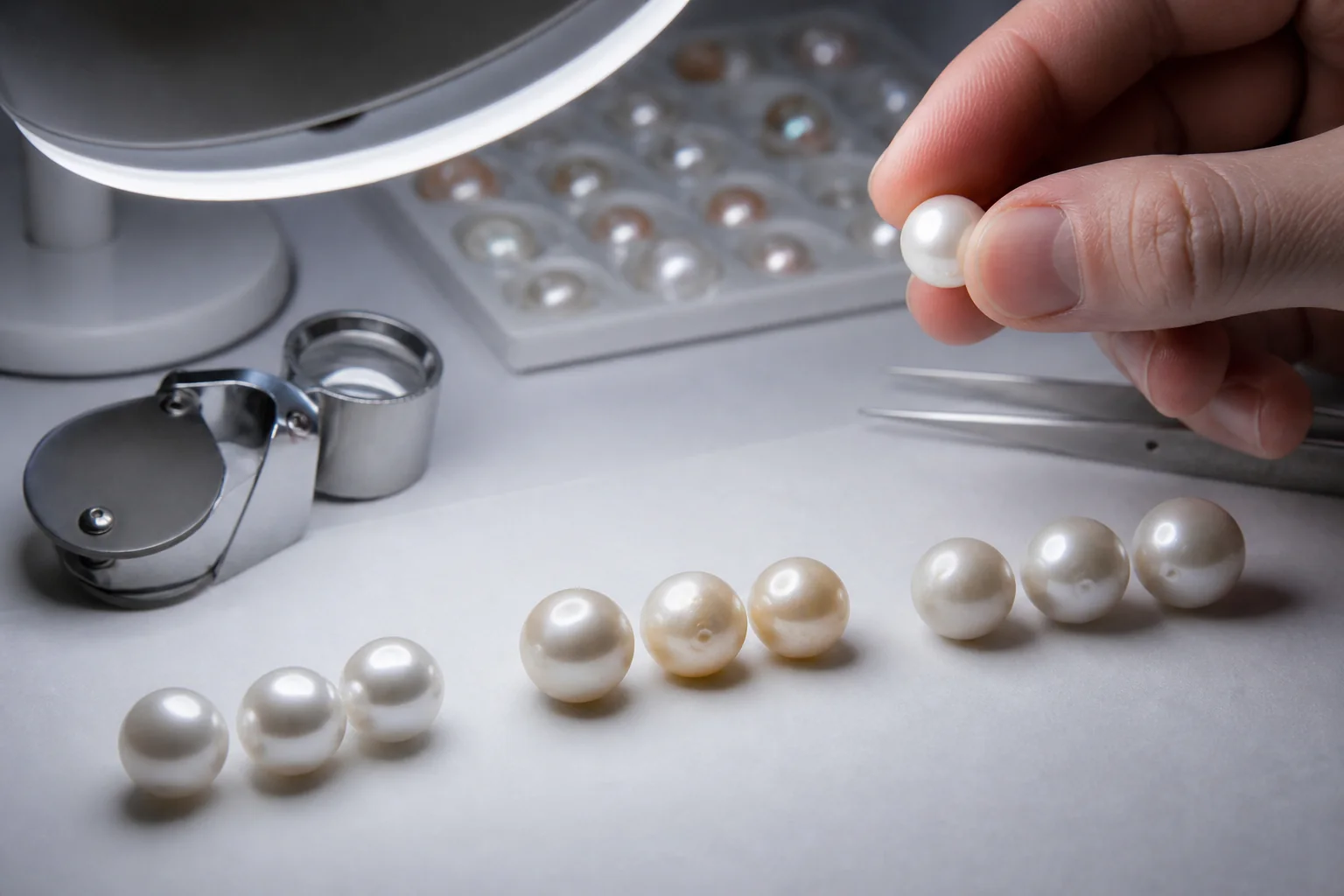
Define the lot and inspection scope first
A sampling plan only makes sense when the lot is clearly defined. Record purchase order, SKU, variant, production batch, quantity, carton range and inspection location. Do not combine unlike products simply to reduce the sample. Pearl studs, necklaces and bracelets have different functions and defect risks. If several colors or sizes share one order, define explicit variant coverage based on lot structure and risk; proportional allocation alone may not represent every SKU. The decision should be documented before inspectors arrive.
State the inspection scope in operational terms: quantity verification, workmanship, pearl attributes, construction, measurements, metal and component checks, packaging, labels, barcodes and carton marks. Identify any tests that need special tools or a laboratory and should not be improvised during a visual inspection. The pre-shipment visit can confirm conformity to the approved sample and specification, but it cannot replace regulatory testing, material verification or a process audit when those are required.
Use acceptance sampling correctly
AQL is commonly used with an acceptance-sampling standard such as the ISO 2859 family. The selected lot size and inspection level lead to a sample size, and the chosen AQL leads to acceptance and rejection numbers. Those parameters should be agreed with a qualified quality professional for the product and risk. Avoid copying a generic online table without confirming the edition, sampling scheme and switching rules. The buyer should own the risk decision instead of leaving the inspector to invent it onsite.
AQL does not mean the accepted shipment contains exactly that percentage of defects, and it is not a permission for the supplier to manufacture to a defect quota. It is a rule for deciding from a random sample whether a lot is acceptable under stated assumptions. Critical issues may use a zero-acceptance rule or a separate control, while major and minor defects may use different agreed AQL values. Define the approach in the purchase order or inspection instruction, not after results are known.
Build pearl-specific defect definitions
Translate the approved pearl standard into observable defects. Size outside the interval, wrong shape family, unacceptable color range, weak luster, surface damage, chipped drill edges and poor matching are different conditions and should not be collapsed into one vague pearl quality defect. Natural growth features that fall inside the approved tolerance are not automatically defects. For pairs and strands, assess the assembled appearance as well as individual pearls because a group can look mismatched even when each piece is acceptable alone.
Use photographs of acceptable variation and clear defects, supported by measurements. For baroque jewelry, define the intended diversity and boundaries. For white pearl items, specify whether warm and cool overtones may mix. For earrings, check face-up balance, profile and drill orientation. Inspectors should compare under consistent light and avoid overexposed photographs. If treatment disclosure or pearl identity is a contractual requirement, verify supporting records or laboratory work rather than expecting visual inspection to prove it.
Inspect construction, function and metal components
Construction defects often create greater customer risk than minor natural surface marks. Check loose pearls, open jump rings, weak crimps, insecure knots, sharp wire ends, misaligned posts, visible adhesive, malfunctioning clasps and inconsistent finished length. Use gentle function checks defined in advance so the inspection does not damage saleable goods. For half-drilled pearls, examine peg alignment and adhesive cleanliness. For knotted strands, review knot placement, thread tension and whether the necklace hangs naturally.
Metal appearance and claims need separate controls. Compare color and finish to the approved sample, look for scratches or plating gaps, and confirm component markings only when supported by the specification and applicable rules. A visual inspector cannot confirm alloy composition. If the buyer needs chemical, nickel-release or other compliance testing, use a competent laboratory and specify the correct market requirement. Keep test reports linked to the exact materials and production lot whenever possible.
Verify retail packaging and shipping preparation
Inspect the complete retail unit, not only the jewelry. Confirm correct SKU, variant, quantity, box or pouch, insert, care card, country or material information required by the buyer, barcode and placement. Scan a representative selection of barcodes against the buyer's item data. Check that jewelry is secure, separated from abrasive metal parts and protected from tangling or crushing. Packaging defects can make a conforming product unsellable or create receiving errors.
At carton level, verify count, assortment, carton marks, gross and net information when required, and consistency with the packing list. Review inner protection and void control, then confirm that cartons are closed and ready for shipment. The inspection report should distinguish product defects from packing or documentation issues. Shipping terms, risk transfer and insurance are commercial matters that should be stated separately; a passed inspection does not transfer risk or replace a clear sales contract.
Make a documented disposition decision
A useful report lists sampled units, carton selection, measurements, test results, defects by category and photographs showing both overview and detail. It should identify the specification and approved sample used. The buyer should review whether the random sample was valid and whether any critical issue requires escalation beyond the numeric result. AQL acceptance does not require a buyer to ignore fraud, wrong material, safety concerns or a systematic defect that changes the nature of the product.
Define outcomes before inspection: release, conditional release, hold for evidence, rework and reinspection, sort, replace or reject according to contract. If rework occurs, require a record of affected quantity and corrective action, then use an appropriate reinspection plan. Preserve reports for supplier performance and future orders. Repeated minor issues can reveal a process problem even if individual lots pass, so trend defect categories rather than treating every inspection as an isolated event.
Procurement decision table
| Finding | Typical classification question | Buyer response |
|---|---|---|
| Wrong pearl or unapproved material claim | Does it change product identity or create compliance risk? | Stop release and escalate evidence |
| Loose pearl, open ring or sharp component | Can it fail, detach or harm the user? | Treat according to critical or major criteria |
| Pair mismatch outside the approved range | Would a customer reject the visible appearance? | Record as a major appearance defect |
| Minor natural surface feature | Is it inside the approved tolerance and away from risk areas? | Do not count when conforming |
| Wrong barcode or SKU label | Can receiving or customers identify the wrong variant? | Hold affected units for correction |
| Crushed outer carton with intact units | Does it compromise protection, count or saleability? | Segregate and assess packaging impact |
Buyer checklist
- [ ] Define lot boundaries by order, SKU, variant, batch and carton range.
- [ ] Agree the sampling standard, inspection level, AQLs and decision rules in advance.
- [ ] Classify critical, major and minor defects by actual product risk and saleability.
- [ ] Provide the current specification, approved sample and visual tolerance examples.
- [ ] Inspect pearl attributes, construction, function, measurements and appearance separately.
- [ ] Verify retail packaging, barcode data, assortment, carton count and shipping marks.
- [ ] Require traceable photographs, measurement records and sampled-carton identification.
- [ ] Predefine release, hold, rework, reinspection and rejection authority.
Frequently asked questions
Does AQL mean an accepted lot is defect-free?
No. Acceptance sampling estimates lot acceptability from a random sample under an agreed plan. It does not inspect every unit or guarantee zero defects.
Can one sample cover every SKU in a pearl jewelry order?
Only if the lot definition and sampling plan legitimately represent all variants. Different product types or materially different variants often need separate or proportionate sampling.
Should naturally occurring surface features on cultured pearls be counted as defects?
Only when they fall outside the approved surface tolerance or affect durability, function or the agreed appearance. Inherent variation within the written standard is not automatically defective.
When should pre-shipment inspection happen?
Usually when production is substantially complete and enough units are packed to inspect product, labels and cartons. The exact readiness threshold should be agreed beforehand.
Related freshwater pearl buying guides
Sources and official references
Use these primary references together with the written product specification and destination-market professional advice.
Turn this guide into a purchase-ready specification
Send Tony Ren your target pearl product, quality tolerances, quantity, packaging and destination. We can discuss current-batch evidence, samples and a clearly scoped quotation.