Start with a written brief before requesting samples
A useful sample request begins with the product and buying decision it must support. State whether the sample is loose pearls, a temporary strand, a finished necklace, earrings, a private-label set or packaging. Include target size, shape, bodycolor, overtone, luster, surface tolerance, drilling, matching, metal, construction, finished dimensions, quantity range and destination market. Reference images can explain style, but measurable requirements prevent a visually attractive sample from becoming an ambiguous production standard.
Separate fixed requirements from preferences and open questions. A fixed requirement might be post metal, clasp type or finished length. A preference might be a slightly cooler white if the current batch supports it. Open questions may include packaging insert size or whether a particular pearl shape can meet the planned price position. This hierarchy lets the supplier propose feasible options without quietly changing a critical feature. Give every sample round a revision number so comments do not become detached from the correct version.
Review pearl quality as separate attributes
Do not approve a sample solely as AAA, premium or high quality. Grade names are not universal purchasing specifications. Review pearl size, shape, color, luster, surface, nacre appearance and matching separately, using the product's intended viewing position. For studs, compare face-up shape, profile and pair balance. For strands, inspect the rhythm of size, color, luster and shape from end to end. For baroque products, define the acceptable family of irregular forms rather than expecting duplication.
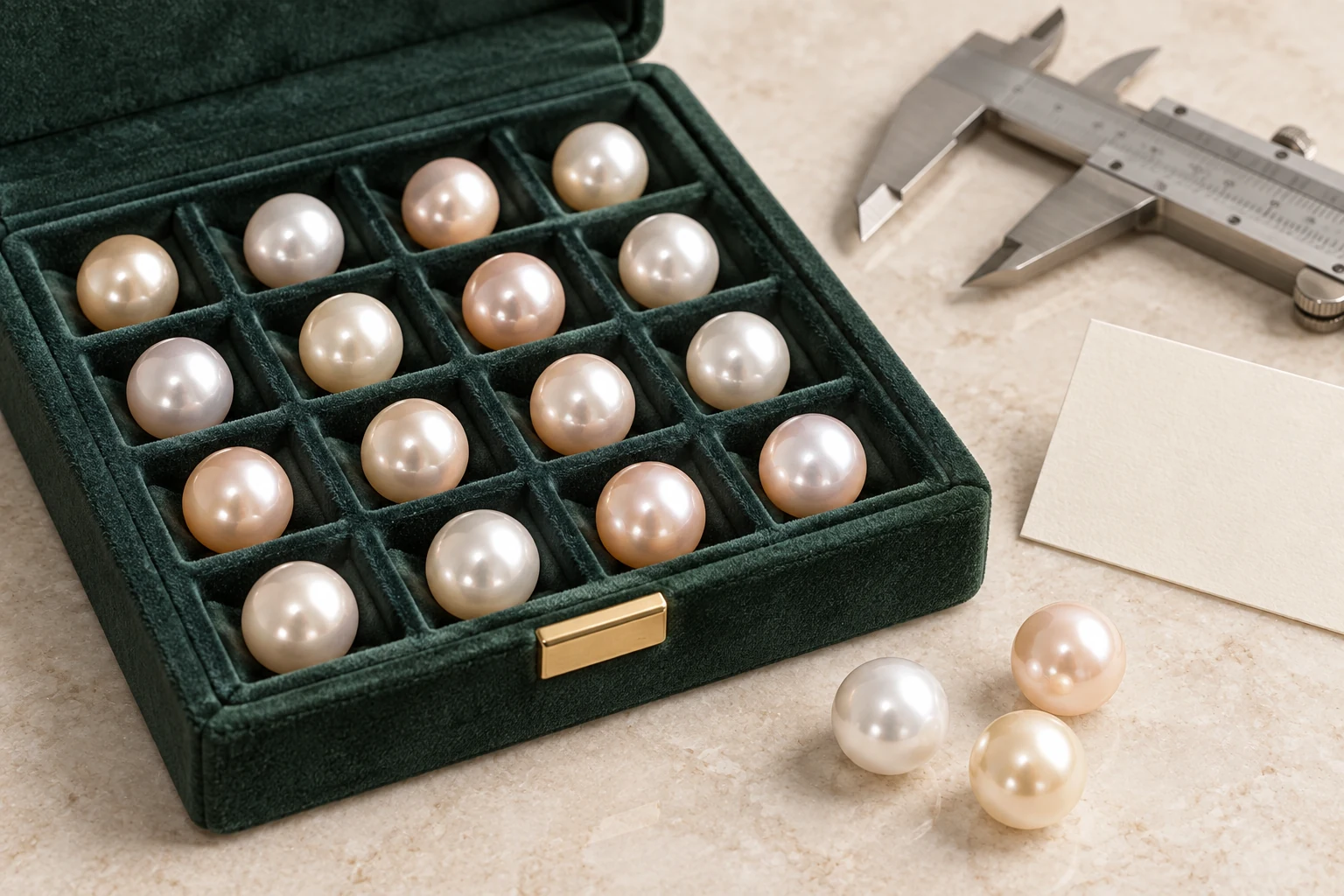
Use consistent lighting and a neutral background, then inspect the sample at both close range and normal use distance. Measure several pearls, not only the best one. Confirm hole diameter and alignment with the actual wire, thread, peg or finding. Photograph the sample with a scale and color-neutral reference, but do not use a phone image as the only color standard. When appearance is commercially important, retain a physical sample because screen settings and automatic white balance can change perceived color and luster.
Test construction, comfort and packaging together
A finished jewelry sample must prove more than pearl appearance. Check clasp operation, post alignment, knot size, thread tension, adhesive visibility, chain movement, plated surfaces and finished dimensions. Wear-test earrings for weight and balance, and test necklaces for twisting, rolling and clasp position. If the design uses half-drilled pearls, confirm hole depth and peg fit. Record observations as pass, revise or investigate; comments such as make it better are too subjective for reliable correction.
Review the product in its intended packaging before approval. Metal parts should not rub pearl surfaces, necklaces should not tangle, and earrings should remain secure during handling. Confirm the box, pouch, insert, care card, barcode location and outer-pack quantity as separate components. A jewelry sample that fits an early box may not fit after chain length or card thickness changes. Approving product and packaging together reduces late changes that can affect carton size, label data, photography and launch timing.
Create an approval record that cannot be misread
Give the approved sample a unique identifier that appears on the specification, purchase order and approval email. Record the approval date, sample revision, supplier batch or material reference, measurements, weight where useful, construction, packaging version and any accepted exceptions. Photograph the complete item, important details and packaging. Mark images as reference views rather than substitutes for the retained sample. Both buyer and supplier should keep a protected control sample when repeat orders or multiple production lines are expected.
The approval record should state what natural variation remains acceptable. Examples include a defined size interval, a harmonious overtone range, minor surface characteristics away from the visible face or controlled baroque asymmetry. Also state what is not acceptable, such as cracked nacre, chipped drill edges, obvious pair mismatch or exposed adhesive. Clear boundaries make the sample useful during incoming inspection and reorders. Without them, each party may interpret the same sample according to different expectations.
Control revisions and pre-production changes
Treat every change after approval as a controlled revision. Ask the supplier to identify the reason, affected components, cost or timing implication, and whether a new sample or focused evidence is required. A small change in pearl diameter can alter count, weight, knotting, card fit and finished length. A different metal finding can affect color coordination and labeling. Do not let chat messages create parallel specifications; consolidate accepted changes into one current document and retire earlier versions.
Before bulk production, request confirmation that the available pearl batch is compatible with the approved sample. Use wide batch photographs, close-ups and a short moving video under consistent light. For a high-variation natural material, a pre-production set made from the actual batch may be more informative than an old development sample. If the proposed batch falls outside the approved range, decide whether to revise, re-sort, separate lots or wait for different material before production begins.
Link the sample to inspection and reorders
The purchase order should name the approved sample and define the inspection method. Specify the lot, sample size or agreed inspection plan, defect categories and decision process before shipment. The control sample helps compare appearance, but measurable checks should cover size, finished dimensions, quantity, construction and packaging. Natural variation means inspectors need both the physical reference and written tolerances. A single perfect showroom piece should never be used to justify rejecting every normal variation in a commercial lot.
For reorders, do not assume the original sample can be reproduced exactly. Ask for current batch evidence and compare it side by side with the retained control. State which attributes have priority if the original material is unavailable. Keep new lots separate until approved, especially when replenishment will sit beside earlier inventory. This approach preserves brand consistency while acknowledging that cultured freshwater pearls are biologically formed materials with inherent variation whose color, shape and surface character can change between harvests and sorting lots.
Procurement decision table
| Approval gate | Minimum evidence | Decision |
|---|---|---|
| Material direction | Named pearl type, size range, shape, color and quality priorities | Approve options for finished sampling |
| Finished sample | Measurements, construction review, wear check and labeled photographs | Revise or advance to packaging fit |
| Packaging fit | Final jewelry in the intended holder, retail pack and label layout | Approve pack-out or correct movement and fit |
| Production standard | Numbered specification, retained sample and accepted variation | Freeze the controlled revision |
| Current batch | Representative wide views, close-ups, video and lot reference | Accept, re-sort, separate or replace material |
| Bulk release | Inspection report tied to the order and approved standard | Release, hold, rework or reinspect |
Buyer checklist
- [ ] Issue a numbered brief with fixed requirements, preferences and open questions.
- [ ] Evaluate size, shape, color, luster, surface, nacre appearance and matching separately.
- [ ] Measure the actual pearl axis, finished dimensions, drilling and relevant component fit.
- [ ] Test construction, comfort, packaging security and labeling as one sellable unit.
- [ ] Assign a unique approved-sample ID and retain dated control samples on both sides.
- [ ] Document acceptable natural variation and unacceptable defects in plain language.
- [ ] Require written change control and a new revision when materials or construction change.
- [ ] Link the approved sample to current batch evidence, inspection and reorder procedures.
Frequently asked questions
Is one approved pearl sample enough for bulk production?
It is useful only when linked to a written specification and an agreed range of natural variation. Current batch evidence and an inspection plan are still needed because bulk pearls will not be identical to one sample.
Should buyers approve pearl color from photographs?
Photographs help document a batch, but lighting, camera processing and screens can change color. Use consistent neutral-light images plus a retained physical sample when color and overtone are critical.
What happens if a component changes after sample approval?
The supplier should disclose the change and its effect. The buyer should update the controlled specification and decide whether focused evidence or a new sample is required before production continues.
Can the same sample control future reorders?
It can remain the comparison reference, but every reorder should be checked against current material. Agree attribute priorities and approve a compatible batch rather than assuming exact replication.
Related freshwater pearl buying guides
Sources and official references
Use these primary references together with the written product specification and destination-market professional advice.
Turn this guide into a purchase-ready specification
Send Tony Ren your target pearl product, quality tolerances, quantity, packaging and destination. We can discuss current-batch evidence, samples and a clearly scoped quotation.