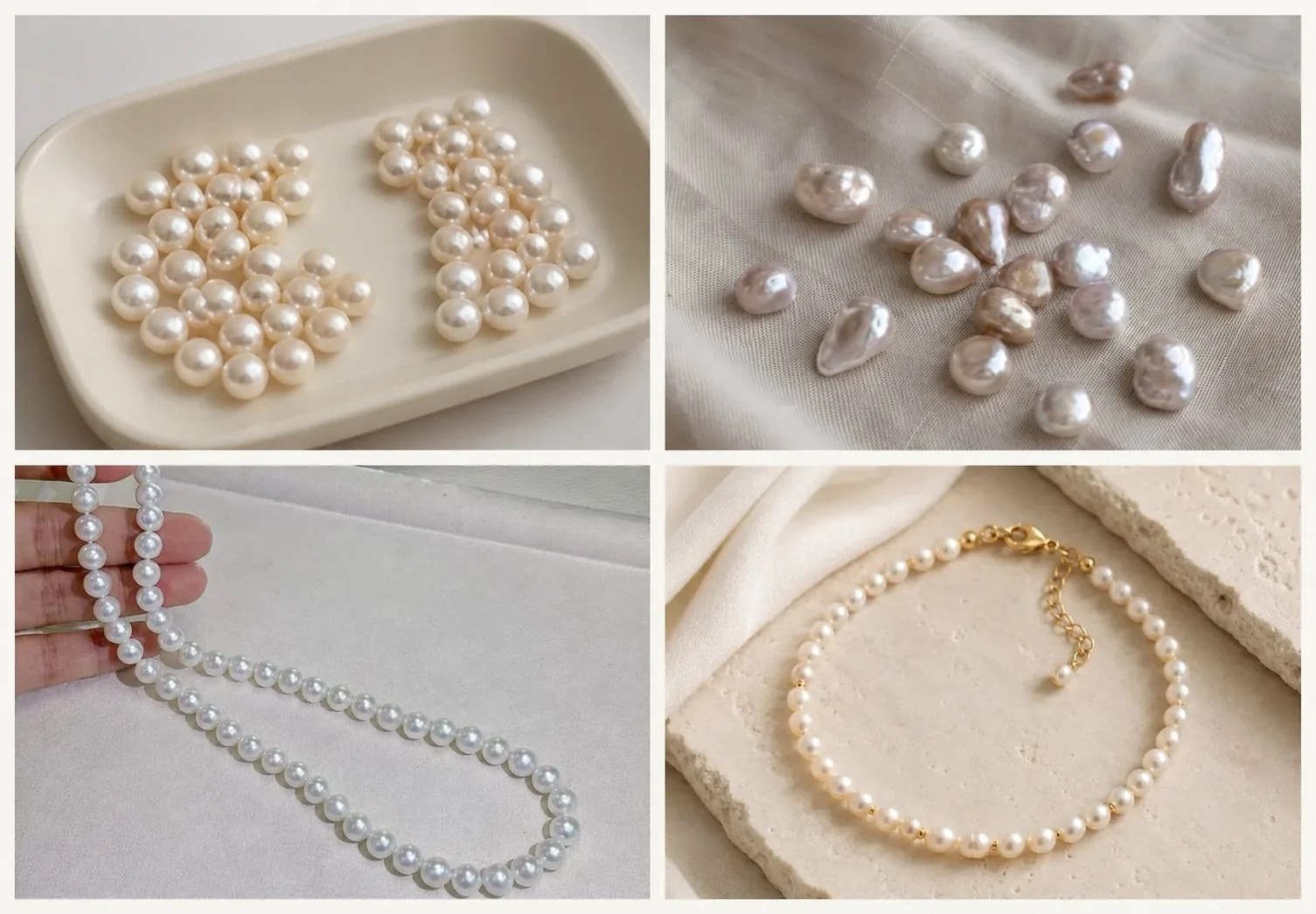
Freshwater pearls are cultured in mussels that live in lakes, rivers and managed freshwater farms. Their broad range of shapes, colors and price points makes them one of the most adaptable materials for jewelry brands, wholesalers and private-label sellers.
How freshwater pearls are formed
During cultivation, a small piece of mantle tissue is introduced into a mussel. The animal gradually coats the growing pearl with layers of nacre. Modern freshwater mussels can produce several pearls at the same time, supporting dependable supply and a wide choice of commercial qualities.
Appearance and natural variety
Common natural colors include white, cream, pink, peach and lavender. Buyers can source round, near-round, oval, button and baroque shapes. This natural variety supports everything from classic strands to contemporary asymmetrical jewelry.
What determines commercial value
Size alone does not determine price. Luster, surface condition, shape, color, nacre quality and matching all matter. Two pearls with the same diameter may have very different values when one has sharper reflections and fewer visible surface features.
Why wholesale buyers choose them
Freshwater pearls can serve entry-level fashion, gifting, accessible luxury and fine-jewelry collections. Brands can build coordinated necklaces, bracelets, earrings and pendants while keeping material choices flexible across target price points.
Are affordable freshwater pearls genuine?
Yes, cultured freshwater pearls can be both genuine and affordable. Price varies with supply, size, shape, luster, surface, nacre, matching and workmanship. Read why freshwater pearls can cost less and how to distinguish cultured from imitation pearls.
Need current pearl samples or a quote?
Send Tony your required pearl type, size, color, quality, quantity and intended use. We can share current batch photos, sample options and wholesale pricing.
Ask Tony on WhatsApp