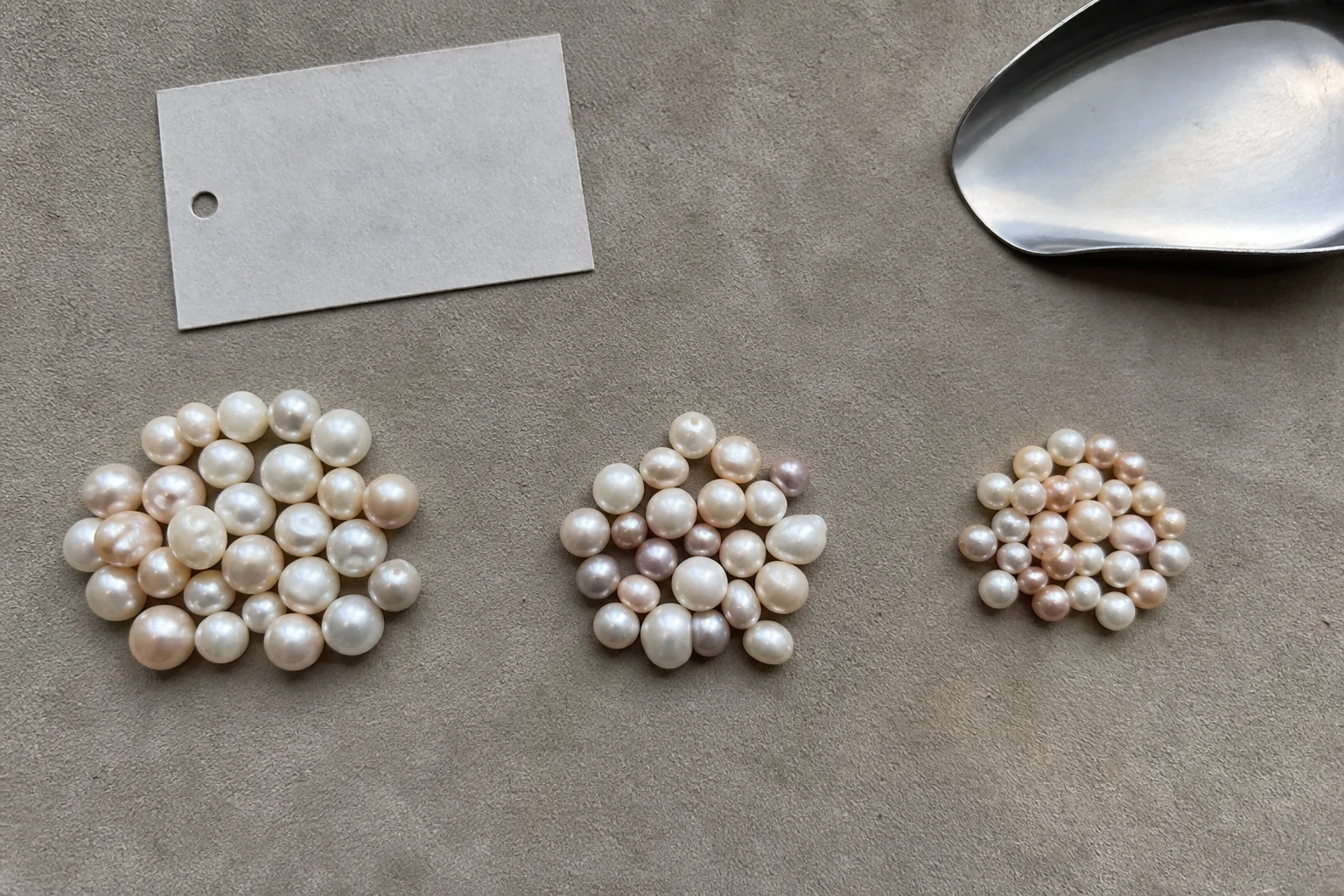
“Cultured” does not mean “fake”
The first distinction is terminology. A natural pearl forms without deliberate human intervention. A cultured pearl also forms in a living mollusk, but cultivation begins with human assistance. An imitation pearl is manufactured from materials such as coated glass, plastic, shell or another substrate. Most pearl jewelry sold today uses cultured or imitation pearls rather than rare natural pearls.
For U.S. marketing, the Federal Trade Commission advises sellers to identify pearls clearly as cultured or imitation. A precise listing such as “cultured freshwater pearl” is more useful than an ambiguous phrase such as “real pearl.” Treatment and material disclosures should follow the requirements of the destination market.
| Term | What it means | What a buyer should verify |
|---|---|---|
| Natural pearl | Formed in a mollusk without deliberate culturing intervention. | Independent laboratory documentation for a high-value claim. |
| Cultured freshwater pearl | Formed in a freshwater mussel after a controlled cultivation process. | Species/environment claim, color treatment, size, shape and quality specification. |
| Imitation pearl | A manufactured material designed to look like a pearl. | Core/coating material, durability, finish and accurate product labeling. |
| “Shell pearl” | A trade term often used for a manufactured shell-based bead or coating, not a cultured pearl. | The exact composition in writing; do not rely on the trade name alone. |
Why genuine freshwater pearls can cost less
Freshwater mussels can produce multiple cultured pearls during a cultivation cycle, creating broader supply than pearl types with more limited yields. Freshwater production also produces a wide spectrum of round, near-round, oval, button, rice, potato and baroque shapes. That means the market can serve both entry-price jewelry and high-quality collections.
Affordable material may have visible growth features, softer luster, less-round shapes or wider matching tolerances. Those characteristics do not make the pearls imitation. They describe a different commercial quality and design use. Small baroque pearls for a casual bracelet and highly matched round pearls for premium earrings should not be priced as though they were the same product.
The seven quality factors behind pearl value
GIA describes pearl quality through seven factors: size, shape, color, luster, surface, nacre and matching. For a multi-pearl strand or pair, matching can add substantial sorting labor. Two strands with the same nominal size may therefore have very different costs.
- Size: larger pearls are generally scarcer within the same pearl type and quality.
- Shape: consistently round pearls usually require more selective sorting than baroque forms.
- Color: bodycolor, overtone, uniformity and treatment disclosure matter.
- Luster: bright, sharp reflections normally command more than dull or chalky surfaces.
- Surface: the number, size and visibility of growth features affect grade and usable orientation.
- Nacre: quality and condition influence appearance and durability.
- Matching: necklaces, pairs and sets require consistency across several factors at once.
Other wholesale cost drivers
The pearl is only part of a finished product's cost. Drilling accuracy, hole diameter, pair selection, knotting, thread, findings, plating, assembly, logo application, packaging, testing, inspection, order quantity and freight all affect the quotation. A low loose-pearl price cannot be compared directly with a finished, knotted necklace packed for retail.
Wholesale quotations should state the unit being priced: per loose pearl, temporary strand, finished strand, pair, piece or set. They should also state whether freight, duties, testing, packaging and sample fees are included.
Can you identify real pearls at home?
Visual checks can help screen a product, but they cannot prove every identity or treatment. Under magnification, cultured pearls may show varied surface structure and cleanly drilled nacre edges, while some imitation coatings look unusually uniform, pool around drill holes or flake. Yet high-quality cultured pearls can be very smooth, and sophisticated imitations can reproduce irregularity.
The familiar “tooth test” is not a professional conclusion and can scratch or contaminate a surface. Weight, temperature and rubbing tests are also affected by the imitation material and construction. When the claim materially affects value, use an experienced gemologist or a laboratory. GIA uses visual examination together with advanced testing, including X-radiography, for pearl identification.
A five-step wholesale verification process
- Get the description in writing. Ask for “cultured freshwater pearl” or the correct imitation material, not just “pearl.”
- Request treatment disclosure. Confirm whether color is natural, dyed, irradiated, bleached, coated or otherwise treated where applicable.
- Review the current batch. Ask for unfiltered photos and short video under neutral light, with a ruler and color reference.
- Approve a representative sample. Record size range, shape, color, luster, surface tolerance, drilling, matching and workmanship.
- Use independent testing when risk justifies it. This is especially important for rare-origin, natural-pearl or high-value treatment claims.
Frequently asked questions
Are cheap freshwater pearls real?
They can be. Lower price may reflect broad supply, smaller size, baroque shape, wider surface tolerance, simpler matching or unfinished format. Verify the product description and batch instead of judging only by price.
Are cultured pearls less real than natural pearls?
No. Both form in mollusks. “Natural” and “cultured” describe how pearl formation began; “imitation” describes a manufactured substitute.
Are shell pearls cultured pearls?
Usually not. “Shell pearl” is a variable trade term commonly applied to a manufactured bead or coating using shell material. Ask for the exact composition and label it accurately.
What evidence should an online seller keep?
Keep the supplier's material and treatment declaration, approved sample record, batch photos, specifications, inspection results and any relevant laboratory report. Your consumer-facing claims should match that evidence.
Related freshwater pearl guides
- Natural vs. treated freshwater pearl colors
- Freshwater pearl grading guide
- How to evaluate a freshwater pearl supplier
- Wholesale sourcing checklist
Sources and discussion signals
Technical references: GIA Pearl Quality Factors, FTC consumer guidance on pearls, and FTC jewelry advertising guidance. Search-demand language was informed by recurring buyer questions in Reddit discussions such as “Why are these so cheap—are they fake?” and “Please help identify—are these real?”. Reddit posts indicate questions, not laboratory conclusions or search-volume estimates.
Verify a current freshwater pearl batch
Send your target size, shape, color, quality, product format and quantity. We can provide current batch photos, sample options and a written quotation.
Ask Tony for Batch Details