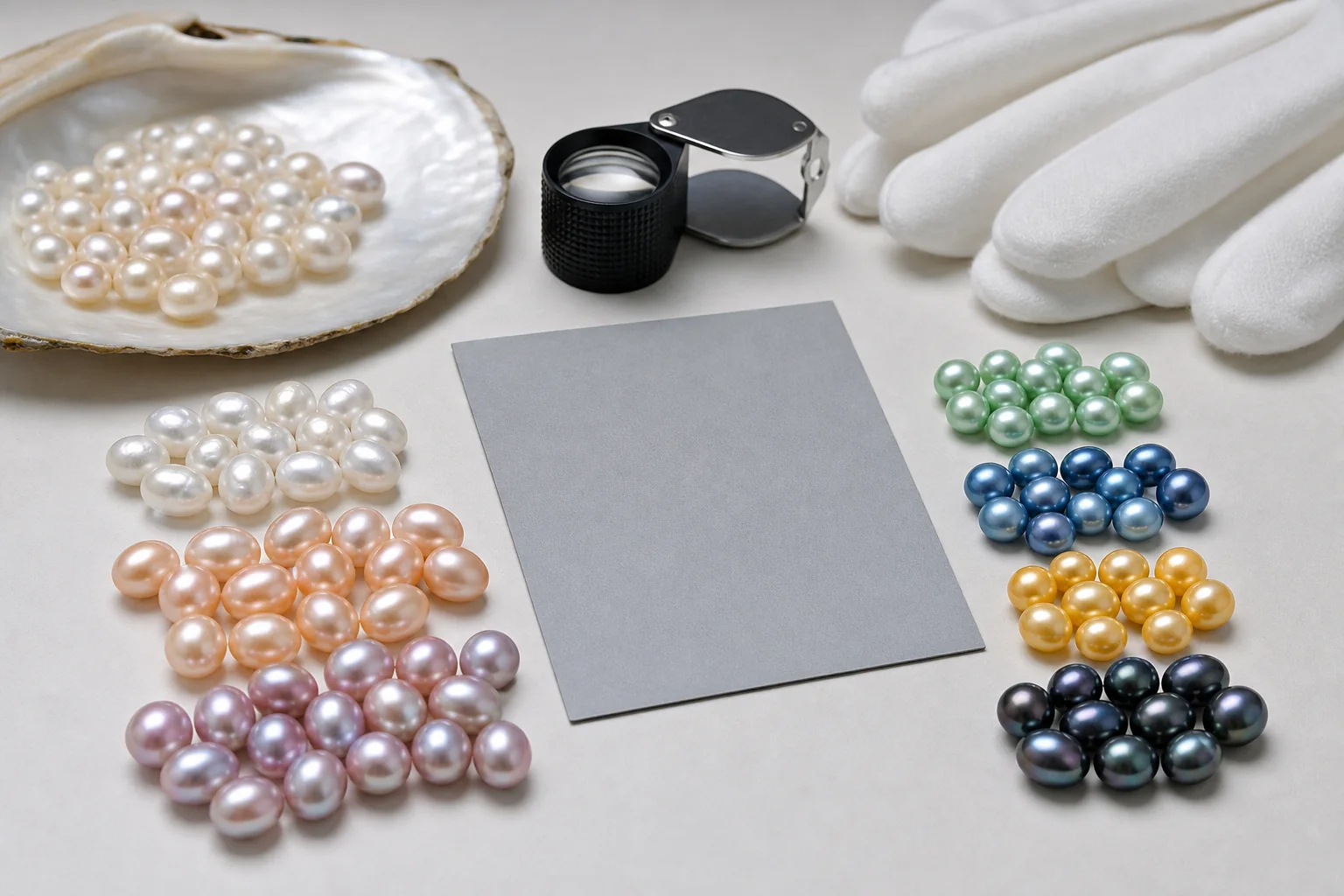
Common natural color families
Untreated freshwater cultured pearl body colors often include white, cream, peach, pink and lavender, with overtones that shift under different light. Even within one family, cool and warm batches vary. Natural variation is expected, so a repeat-order specification should use an approved range rather than one screen color.
Why pearls may be treated
Commercial treatments can create a more uniform appearance, lighten the base color or produce fashion colors not normally available from the mussel. Treatment is not automatically a defect, but it changes how the product should be described, tested and cared for. Buyers need clear information before making claims.
Visual clues are not proof
Very intense or unusually uniform color may justify more questions, and dye can sometimes concentrate around holes or surface features. However, visual inspection alone is not conclusive. Ask the supplier for process disclosure and use qualified testing when the treatment status is material to price, labeling or brand claims.
How to approve color for production
Use controlled neutral lighting, a gray card and physical approval samples. Review loose pearls and the complete finished piece because metal color, thread and nearby materials affect perception. Record acceptable body-color and overtone ranges and keep limit samples for future lots.
Questions for a wholesale supplier
Ask whether the pearls have been bleached, dyed, irradiated, coated or otherwise enhanced; whether the process is stable for the intended use; and what care instructions apply. Put the agreed disclosure in the purchase specification and ensure downstream product descriptions remain accurate.
Why dark freshwater pearl colors need a clear disclosure
Recent buyer discussions repeatedly ask whether black, gray and vivid freshwater pearls are naturally colored or dyed. Freshwater cultured pearls naturally occur in white, cream, peach, pink and lavender families; many dark or highly saturated commercial colors are treated. Visual clues alone are not proof, so request a written treatment declaration and make the same distinction in retail product data. See the cultured-versus-imitation and buyer-verification guide for a broader evidence checklist.
Frequently asked questions
Can you identify dyed pearls from a photo?
Not reliably. Photos can suggest questions, but written disclosure and appropriate testing are more dependable.
Are treated pearls low quality?
Not necessarily. Quality depends on appearance, durability, disclosure and suitability for the product.
How should repeat color orders be controlled?
Use retained physical samples, neutral lighting and an agreed acceptable range.
Related freshwater pearl guides
Need current pearl samples or a quote?
Send Tony your required pearl type, size, color, quality, quantity and intended use. We can share current batch photos, sample options and wholesale pricing.
Ask Tony on WhatsApp