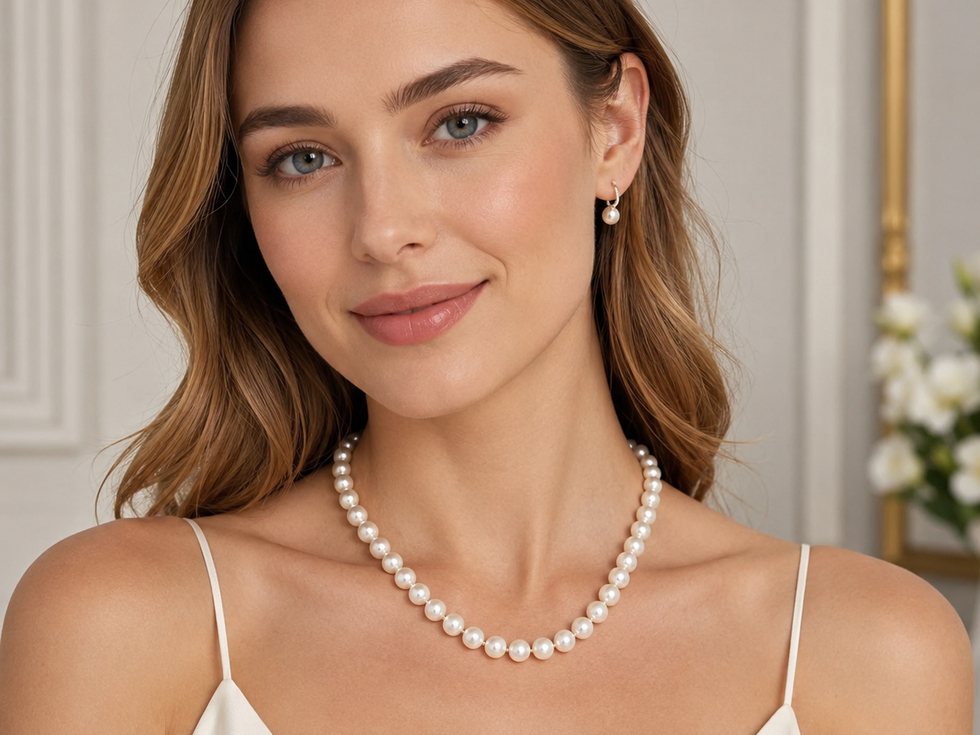
Start with the intended visual scale
Pearl diameter changes the apparent scale, weight and market position of a necklace. Small cultured pearls can create a fine, detailed line, while larger pearls create stronger visual emphasis and require more attention to weight, matching and component balance. Define the intended customer, styling context and product role before selecting a range. A millimeter number should support a deliberate silhouette rather than being copied from a supplier's available stock.
Create a visual brief that shows the necklace at normal viewing distance as well as close up. Reference images may communicate mood, but they do not replace a size specification or physical sample. Record whether the design should appear delicate, classic, bold or sculptural and explain which features create that effect. This helps the supplier propose compatible pearl sizes without quietly changing the product's visual identity.
Measure the correct axis for each pearl shape
The description of pearl size must match the shape and drilling orientation. Round pearls are described by diameter, while oval, drop, rice and baroque forms may need width and length information. CIBJO provides measurement conventions for natural and cultured pearls; the buyer should apply an appropriate method consistently and show the axis in the specification. A broad size label without direction can produce a necklace whose face-up scale differs from the approved sample.
Also consider the dimension along the stringing path because it affects how many pearl surfaces appear across the silhouette and how the necklace curves. Two pearls with similar face-up width can occupy different space if their length or drill direction differs. Record actual sample measurements and representative distribution, not only minimum and maximum values. Inspect multiple positions so one unusually large center pearl does not become the sole size reference.
Balance pearl scale with shape and surface character
Diameter does not determine visual impact by itself. High luster can make a pearl appear more prominent, while elongated or irregular outlines change the amount of visible surface. Define shape family, bodycolor, overtone, luster and surface tolerance alongside size. A necklace of large baroque cultured pearls needs a different proportion strategy from a necklace of round pearls in the same nominal width.
Decide whether the size should be visually uniform, gently varied or intentionally mixed. For organic layouts, use boundary photographs and a full-strand view rather than demanding mathematically identical pearls. Abrupt outliers may disrupt proportion even when every unit sits inside the written range. Ask the supplier to show representative material and approve the assembled appearance before bulk stringing.
Scale clasps, spacers and focal components
The clasp should look intentional beside the approved pearl scale and still meet functional needs. A very small clasp may be difficult to operate or visually disappear beside large pearls, while an oversized clasp can dominate a delicate necklace. Record clasp dimensions, attachment geometry and visible orientation. Review the back and side views because the end assembly can appear bulky even when the front photograph looks balanced.
Apply the same proportion review to spacers, pendants, bead caps and extender chains. Define the relationship between focal-component dimensions and neighboring pearls. Components must also fit the drill, stringing and load requirements; visual proportion cannot justify unsafe geometry. Approve the complete necklace with actual findings, then preserve component codes so future production does not substitute a similar-looking but differently scaled part.
Review weight, drape and photography
Larger pearls can increase finished mass and change how the necklace follows the body. Measure the complete sample and review drape on a suitable form. Observe whether the clasp migrates, the center shifts or directional shapes rotate. There is no universal size that guarantees comfort; product-specific evidence should guide the range. If weight matters commercially, include it in specifications and customer information without unsupported comfort promises.
Photography can distort perceived scale through crop, focal length and model styling. Capture the necklace straight, on a neutral form and with a dimensional reference. Customer-facing images should represent the approved size range rather than a selected oversized sample. For variants, photograph each relevant scale or clearly label which size is shown. This reduces confusion when buyers compare a 6–7 mm option with a 9–10 mm option.
Inspect proportion and protect it on reorders
Inspection should verify the pearl size method and range, representative distribution, shape family, visual outliers, clasp scale, focal components and overall silhouette. Measure several positions and photograph the complete necklace at a consistent distance. A unit can meet the numeric range yet fail the approved proportion if most pearls collect at one extreme or a focal component has been substituted.
For reorders, retain a labeled necklace, measurement record and component list. Current cultured-pearl lots may shift within the approved range, so compare the proposed material with earlier inventory before production. If the available distribution changes the visual scale, approve a new sample and update photography where necessary. Do not silently widen the size range to absorb supply changes.
Procurement decision table
| Element | Proportion question | Required evidence | QC risk |
|---|---|---|---|
| Pearl diameter | Does the range create the intended visual scale? | Axis method, measurements and sample | Distribution clustered at wrong extreme |
| Pearl shape | Does length or profile alter face-up scale? | Front and side layout views | Nominal width hides different silhouette |
| Clasp | Is it visually and functionally balanced? | Assembled back and side photographs | Bulky or undersized end assembly |
| Focal component | Does it coordinate with neighboring pearls? | Dimensioned center layout | Crowding or visual dominance |
| Complete necklace | Do weight and drape support positioning? | Measured sample on neutral form | Scale differs from customer imagery |
Buyer checklist
- [ ] Define the intended visual scale and customer position before choosing diameter.
- [ ] State the measurement axis for round, oval, drop and baroque pearls.
- [ ] Record representative size distribution, not only minimum and maximum.
- [ ] Specify shape, luster, color and surface priorities with size.
- [ ] Review clasp, spacer, pendant and end-component proportions.
- [ ] Measure complete-product weight and review drape on a neutral form.
- [ ] Use customer photography that represents the approved size range.
- [ ] Retain the sample and component list for reorder comparison.
Frequently asked questions
What pearl size is best for a necklace?
There is no universal best size. Choose the range that fits the intended silhouette, customer, shape, weight, clasp and product position, then approve the actual sample.
Does the same millimeter size look identical in every shape?
No. Length, profile, drill direction, luster and surface area change face-up scale. Specify the correct measurement axes and review the complete layout.
Should the clasp size change with pearl diameter?
It may need to. The clasp must meet functional requirements and look proportionate beside the selected pearls. Approve its dimensions and assembled appearance.
How should pearl size be checked in production?
Measure representative positions using the stated method, review distribution and visual outliers, and compare the complete necklace with the retained approved sample.
Related pearl necklace buying guides
Sources and official references
Use these primary references together with the written product specification and destination-market professional advice.
Turn this guide into a purchase-ready necklace specification
Send Tony Ren your target pearl necklace design, dimensions, quality tolerances, quantity, packaging and destination. We can discuss current-batch evidence, samples and a clearly scoped quotation.