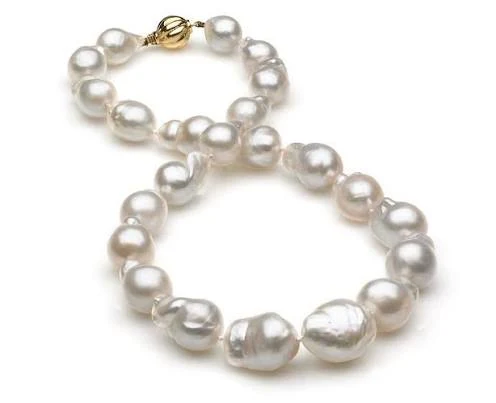
Match the clasp to the necklace architecture
Start with the number of strands, pearl size, finished length, stringing material and expected necklace weight. A small single-strand necklace and a multi-strand statement piece may require different connection areas and operating forces. The clasp should sit correctly against the end pearls and should not twist the necklace into an unintended orientation. Review the clasp in the complete sample because a component that works alone can still be awkward after assembly.
Define the customer and use case. Some buyers prioritize one-handed operation, a familiar mechanism or a decorative focal clasp; others prioritize a low-profile closure that remains behind the neck. There is no universally best style. The buyer should approve the balance of appearance, function, cost and serviceability and should avoid age, medical or accessibility claims unless the product has been evaluated for those claims.
Compare common clasp mechanisms
Lobster clasps use a spring-operated lever and are familiar across many jewelry categories. Spring-ring clasps provide a compact circular option. Box clasps use an inserted tongue and housing, sometimes with an added safety feature, and can support decorative designs or multiple strands. Toggle clasps use a bar and ring and are visually direct, while magnetic mechanisms require careful design, labeling and market review. Each mechanism has different operating and inspection points.
Name the exact approved style and variant. Terms such as lobster clasp do not define dimensions, metal, spring behavior, connector size or finish. If a clasp includes a safety catch, extender, chain tag or decorative element, list those parts separately in the bill of materials. Photograph the front, back and open positions, and include a dimensioned drawing when a catalog code alone cannot control the purchased component.
Specify metal and finish truthfully
State the base metal and any precious-metal or plating claim using supplier documentation and requirements for the destination market. Gold color is not the same as gold plating, and a visual photo cannot establish metal composition or plating thickness. Record the approved finish color, surface texture and any testing or declaration the buyer requires. The FTC Jewelry Guides emphasize truthful representation of metallic content and product characteristics in the United States.
Pearls, including cultured pearls, can be sensitive to chemicals and abrasion, so the complete necklace also needs appropriate care information. Consider how cleaning advice for the clasp interacts with care for the pearls and stringing material. Do not recommend a chemical process for a metal component if it may contact the pearls. If a product uses different metals across the clasp, jump rings and chain, identify each item rather than applying one claim to the whole assembly.
Control dimensions and connection details
A drawing should show clasp length, width, thickness, connector opening and the direction in which the mechanism operates. For multi-strand pieces, specify connector spacing and the strand order. Confirm that jump rings, end caps, bead tips or guards fit the stringing system without crowding the final pearls. A clasp that is too large can dominate a delicate strand, while a connector that is too small can force an unsafe or untidy assembly.
Include finished necklace length rules because changing a clasp can change the end-to-end measurement. Define whether the stated length includes the clasp and extender. If logo placement is required, approve the method, position, orientation and legibility on the production material. Treat the clasp, end components and stringing finish as one controlled interface rather than separate purchasing decisions.
Approve functional checks before bulk production
Development checks should confirm that the clasp opens and closes as intended, reaches its fully engaged position, remains connected during the agreed handling procedure and does not expose sharp edges or unfinished areas. The test should reflect the product design and risk. Record the sample, method, number of cycles or repetitions if used, acceptance criteria and result. A test performed on an unassembled clasp does not replace evaluation of the finished necklace.
Production inspection can combine visual review with a defined operation check on the agreed sample. List defects such as failure to engage, unexpected opening, stuck lever, deformed tongue, loose jump ring, wrong finish, visible plating damage, sharp edge or incorrect orientation. If a numeric force or cycle requirement is commercially necessary, have it developed and validated for the specific product rather than copying a generic value from another design.
Manage substitutions and reorders
Clasp substitutions can alter function, metal claims, appearance, necklace length and compliance documentation. The purchase order should prohibit unapproved changes and identify any pre-approved alternate by its own code and evidence. A supplier should not replace a clasp merely because it looks similar in a photograph. Require written review of price and schedule impact before changing the production bill of materials.
For repeat orders, compare the new component with the retained approval sample and current drawing. Check mechanism feel, dimensions, finish color and connection parts rather than relying on the same catalog name. If the component is discontinued, create a new sample and revision. This protects the product listing, packaging claims and customer experience while giving the supplier a controlled route for necessary change.
Procurement decision table
| Clasp type | Useful design context | Control points |
|---|---|---|
| Lobster | Familiar single-strand and extender designs | Lever operation, spring return, ring size and orientation |
| Spring ring | Compact classic necklaces | Ring diameter, lever access, closure engagement and connector |
| Box clasp | Decorative or multi-strand products | Tongue engagement, housing, safety feature and strand spacing |
| Toggle | Visible, easy-to-understand design feature | Bar length, ring size, drape and unintended release risk |
| Magnetic | Special design concepts after market review | Magnet system, separation behavior, labeling and complete-product testing |
Buyer checklist
- [ ] Define necklace weight, strand count and end construction.
- [ ] Identify the exact clasp style and controlled component code.
- [ ] Specify dimensions, connectors and operating direction.
- [ ] Document base metal, finish and supported plating claims.
- [ ] Approve logo position and decorative details.
- [ ] Evaluate the clasp on the complete necklace sample.
- [ ] List functional and visual defects for production inspection.
- [ ] Require approval for every clasp or connector substitution.
Frequently asked questions
Which clasp is best for a freshwater pearl necklace?
There is no universal best choice. Select the mechanism for necklace weight, strand count, user operation, styling, end construction and verified finished-product performance.
Does changing the clasp change necklace length?
It can. Clasp and connector dimensions affect end-to-end length, so a substitution may require a new sample and updated finished-length record.
Is a gold-color clasp the same as a gold-plated clasp?
No. Color alone does not establish metal or plating. Base metal and finish claims should be supported by the specified component and relevant documentation.
Should every clasp be function tested?
The buyer should define an appropriate production inspection plan based on risk. Critical operation can require broader checking, while other attributes may use an agreed sample.
Related freshwater pearl buying guides
Sources and official references
Use these primary references together with the written product specification and destination-market professional advice.
Turn this guide into a purchase-ready specification
Send Tony Ren your target pearl product, quality tolerances, quantity, packaging and destination. We can discuss current-batch evidence, samples and a clearly scoped quotation.
Related pearl necklace sourcing guides
Continue with these practical necklace design, specification, quality-control and assortment-planning resources.