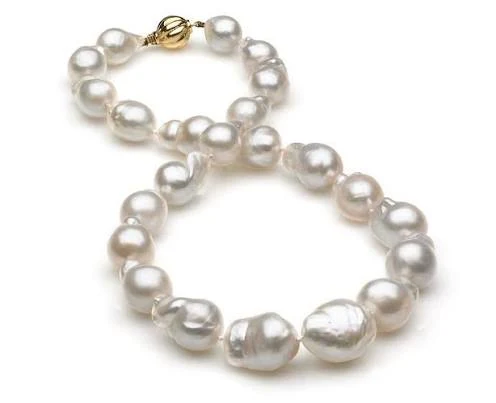
Treat the necklace end as a connection system
The last pearl, stringing material, protective component, loop, jump ring and clasp work together. A strong clasp cannot compensate for thread rubbing against a sharp edge, and an attractive bead tip cannot compensate for an insecure knot hidden inside it. Start the specification with a sectional drawing or clear sequence showing how the stringing material leaves the final pearl, passes through protection and connects to the clasp assembly.
Record component codes rather than broad labels. French wire can vary in diameter, metal color and flexibility; bead tips differ in cup size, closure style and loop geometry; jump rings may be open or otherwise constructed. State the approved component, dimensions that affect fit, finish, quantity and supplier reference. If substitutions are allowed, define the performance and appearance criteria that must remain equivalent and require approval before production.
Match protection to thread and hole geometry
End protection should reduce damaging contact where flexible stringing turns toward a metal finding. The selected protector must fit the thread build and clasp connection without creating a bulky bend or exposing a sharp edge. Check the final pearl hole diameter, edge condition and orientation. If the hole is rough, chipped or too narrow for the planned return path, forcing the assembly can damage the thread or pearl rather than improve security.
French wire is a small coiled tube used around thread at a connection point, but the purchase order should not assume that its presence alone guarantees durability. Specify length, coverage and appearance on the approved sample. Inspect whether it supports the bend, remains seated and avoids snagging. For designs using another protector, describe the same functional outcome and visual boundary instead of presenting one traditional method as universally required.
Define bead-tip and loop closure details
A bead tip or clamshell-style end can conceal a knot and provide a loop for the clasp connection. The cup must suit the knot and thread without crushing them, and the closed part should look neat from normal viewing angles. State whether adhesive is permitted, where it may be applied and what residue is unacceptable. Do not use adhesive as an undefined substitute for a controlled mechanical or knotting process.
Define loop orientation and closure. The loop should align with the clasp assembly so the necklace hangs without a persistent twist. If a jump ring connects the end to the clasp, specify its size, material, finish and closure expectation. Open gaps, crossed loops, sharp ends and plating damage should be listed as defects. Photograph the approved left and right ends because visually similar parts can be assembled in different directions.
Balance symmetry with clasp function
Compare both ends for component sequence, visible length, metal color and transition from pearls to clasp. Symmetry is often desirable, but the clasp mechanism may require different parts on each side. The specification should show intentional differences so inspectors do not reject correct asymmetry or accept accidental mismatch. For a box clasp, toggle, lobster clasp or magnetic system, review how the end assembly supports the operating direction and load path.
Check movement through the full opening and closing cycle using a defined gentle function test. The protective material should not bind the clasp, and the last pearls should not collide with moving parts. Observe whether the necklace lies flat when closed. If the clasp is heavier than the pearl strand, assess whether it rotates to the front or pulls the end sections out of line. Design approval should include the complete necklace, not only a photographed clasp.
Inspect workmanship and material claims separately
Visual inspection can confirm clean loops, aligned parts, intact finish, absence of sharp edges and consistency with the approved construction. It cannot prove metal composition, plating thickness or regulated chemical compliance. Obtain supplier declarations and appropriate testing for claims required by the destination market. Keep documents linked to the exact component code and production lot rather than applying one report to unrelated findings.
Use risk-based sampling for assembled units and keep failure records. Inspectors should identify whether a finding is cosmetic, functional or identity-related. A small finish variation inside the approved range differs from an open connection that can release the strand. When destructive pull or cycle testing is required, define separate samples, fixtures and acceptance criteria with a qualified professional so saleable inspection pieces are not improvised test specimens.
Document repairability and replacement parts
End finishing is frequently disturbed during restringing, so record components and assembly instructions for after-sales work. Keep spare protectors, bead tips, rings and clasp parts where continuity matters. If a proprietary end piece cannot be reopened without damage, decide whether repair requires complete replacement and communicate that limitation internally before launch.
For reorders, compare current component finish, dimensions and loop geometry with the retained sample. A supplier may replace a small finding with a visually similar part that changes fit or movement. Require written change approval and update the bill of materials. Returned necklaces should be examined for the actual failure location: thread abrasion, knot release, ring opening, clasp damage and misuse require different corrective actions.
Procurement decision table
| End method | Primary design question | Inspection focus |
|---|---|---|
| French wire protection | Does it fit thread and loop without bulk or snagging? | Coverage, seating and clean bend |
| Bead tip or clamshell | Does cup size suit the secured knot and visual scale? | Closure, residue, loop alignment |
| Direct thread loop | Is the path protected and documented for this clasp? | Abrasion points, knot and symmetry |
| Jump-ring connection | Are material, size, finish and closure defined? | Gap, sharp ends and finish damage |
| Proprietary end fitting | Can it be sourced and repaired consistently? | Part code, orientation and change control |
Buyer checklist
- [ ] Draw the complete stringing-to-clasp connection sequence.
- [ ] Record component codes, dimensions, metal and finish.
- [ ] Confirm compatibility with thread build and final pearl holes.
- [ ] Define protection coverage, loop orientation and permitted adhesive.
- [ ] Approve left and right end appearance on a finished sample.
- [ ] Inspect movement, sharp edges, gaps, residue and plating damage.
- [ ] Separate workmanship checks from material compliance evidence.
- [ ] Keep spare parts and assembly records for reorders and repair.
Frequently asked questions
What is French wire on a pearl necklace?
It is a small coiled tube commonly placed around thread at a clasp connection. Its size, coverage and fit must be approved with the actual thread and findings.
Are bead tips required for knotted pearl necklaces?
No. They are one end-finishing option. Direct protected loops and other controlled constructions may be suitable when specified and validated.
Can visual inspection confirm clasp metal composition?
No. Visual inspection checks workmanship and appearance; composition or regulated-chemical claims require appropriate supplier evidence and testing.
Should both necklace ends look identical?
They should follow the approved design. Some clasp systems require intentional asymmetry, so drawings should show the correct component sequence on each side.
Related pearl necklace buying guides
Sources and official references
Use these primary references together with the written product specification and destination-market professional advice.
Turn this guide into a purchase-ready necklace specification
Send Tony Ren your target pearl necklace design, dimensions, quality tolerances, quantity, packaging and destination. We can discuss current-batch evidence, samples and a clearly scoped quotation.