Define the intended silhouette before components
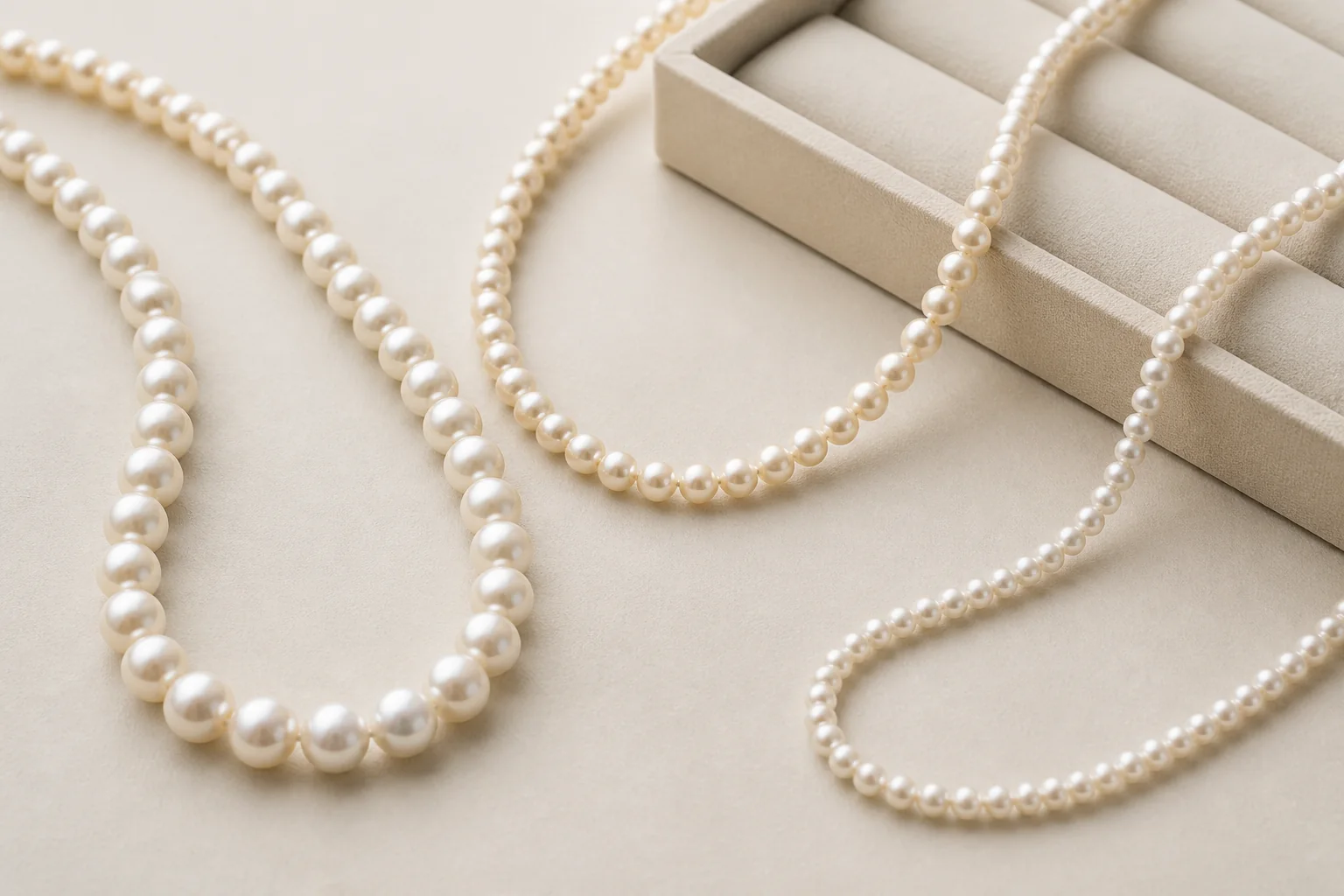
Multi-strand can describe parallel graduated rows, equal-length torsades, nested bibs, spaced stations or deliberately twisted constructions. These designs do not share one automatic assembly rule. Begin with front, side and laid-flat views that show how the necklace should look when worn. State whether strands remain separate, overlap at controlled points or twist as a bundle. Name the front center, side transitions and clasp position so production has a common orientation.
Identify the intended wearer or display reference without promising universal fit. Neck circumference, garment neckline and posture change how rows separate. Approve a physical sample on the brand's defined form or fit model and record that reference. For wholesale programs, provide the finished dimensions that create the silhouette rather than asking a supplier to copy one styled photograph. A good drawing shows every row from connector to connector.
Specify every strand and length offset
Give each row an identifier and list pearl size range, count or layout, color, shape, stringing material, knotting pattern and finished path length. State measurement endpoints. Inner and outer rows generally need different lengths to nest smoothly, but the required offset depends on pearl diameter, row spacing, connector geometry and target curve. Do not copy a universal offset from another necklace without sampling the current construction.
Measure the approved sample in a relaxed condition and keep a row-by-row record. If the design uses graduated pearl sizes within or between rows, map the sequence. The total pearl count may change slightly when cultured freshwater pearl dimensions vary within tolerance, so define whether count, finished length or visual layout has priority. Require approval before production changes a row by adding gaps or hidden components merely to reach length.
Engineer connectors, spacers and clasp load paths
Connectors and spacers control row separation and transfer load to the clasp. Specify their material, finish, number of holes, hole spacing, orientation and attachment method. Check that edges and holes contacting thread are smooth. A connector designed for two small rows may not suit three heavy rows. Review how the row order maps into the clasp so strands do not cross unintentionally between the final spacer and closure.
The clasp must be usable under the necklace's combined weight and width. Check opening direction, finger access and whether it remains centered during wear. A decorative box clasp may distribute rows differently from a single-ring lobster clasp. If transition rings or end bars are used, include them in the bill of materials. Visual inspection should confirm closed connections and aligned rows, while metal claims require separate evidence.
Control tension and movement across rows
Each row should articulate without forcing neighboring rows into a kink. Excessively tight inner rows can lift the necklace, while loose outer rows can sag or tangle. Approve the relaxed drape and specify a handling sequence: lay flat, lift from the clasp, place on the fit form and gently rotate through normal movement. Observe whether rows return to the intended order and whether spacers stay oriented.
For intentionally twisted designs, define the number or visual density of twists at the approved length and how the necklace is stored. Twisting changes effective length and clasp torque. The supplier should not twist a design simply to hide row-length mismatch. For untwisted designs, crossing at the clasp, reversed row order and persistent overlap should be explicit defects unless the boundary sample permits controlled movement.
Build an inspection plan for the complete assembly
Inspect identity, strand count, row order, finished length, clasp and overall silhouette first. Then measure individual rows or key offsets using the agreed method. Check pearl matching within each row and harmony between rows under consistent light. Review connectors for orientation, scratches, open links and sharp contact points. Photographs should include the laid-flat necklace and the approved fit form, because either view alone can miss a defect.
Use lot-based sampling and record defects by row and component. One failed connector may affect every strand and should not be counted as several unrelated cosmetic issues. Define critical, major and minor conditions according to safety, function and saleability. If a destructive or load test is used, set aside specified samples and document the fixture and acceptance rule. Do not invent a pull force during ordinary visual inspection.
Package and service multi-strand necklaces
Packaging should preserve row order and avoid concentrated pressure on connectors. Use retainers or channels that support strands at several points without cutting thread or rubbing pearl surfaces. The clasp and metal parts should be isolated from pearls. Test the closed retail pack under the planned distribution method and examine whether rows arrive crossed, twisted or compressed.
Keep the row map, component codes and approved sample for repairs and reorders. If one row breaks, decide whether the service process replaces that row, restrings the complete piece or rejects a partial color mismatch. Cultured pearl batches can vary, so spare material should be identified by lot when visual continuity matters. Returned units can reveal whether failures cluster at one connector or row and should feed corrective action.
Procurement decision table
| Design element | Record for each style | Common failure to prevent |
|---|---|---|
| Rows | Identifier, pearl layout, count and path length | Wrong order or unplanned overlap |
| Length offset | Approved difference between adjacent rows | Sagging outer row or lifted inner row |
| Connector | Hole spacing, orientation, material and finish | Crossed strands or thread abrasion |
| Clasp transition | Row mapping and connection sequence | Torque, poor access or off-center clasp |
| Packaging | Retention points and metal isolation | Tangling, compression or surface scratches |
Buyer checklist
- [ ] Define whether rows are parallel, nested, overlapping or twisted.
- [ ] Give every row a unique identifier and complete layout.
- [ ] Record path length, endpoints and offset for each row.
- [ ] Specify connector hole spacing, orientation, material and finish.
- [ ] Map every row through spacers and into the clasp.
- [ ] Approve drape on a named form or fit reference.
- [ ] Inspect complete units for order, balance, movement and connections.
- [ ] Package rows separately enough to preserve the approved silhouette.
Frequently asked questions
How much longer should each row of a multi-strand necklace be?
There is no universal offset. Pearl diameter, row spacing, connectors and target drape determine the difference, so approve it on the actual construction.
Should multi-strand rows use the same pearl size?
They can, but the design may also graduate size between rows. Record the size and matching rule for every row rather than relying on one headline range.
Can crossed strands be accepted?
Only when crossing or twisting is intentional and documented. Persistent accidental crossing should be treated against the approved layout and function criteria.
How should a multi-strand necklace be packaged?
Support and separate the rows at controlled points, isolate metal from pearls and test the complete pack for tangling, compression and connector damage.
Related pearl necklace buying guides
Sources and official references
Use these primary references together with the written product specification and destination-market professional advice.
Turn this guide into a purchase-ready necklace specification
Send Tony Ren your target pearl necklace design, dimensions, quality tolerances, quantity, packaging and destination. We can discuss current-batch evidence, samples and a clearly scoped quotation.