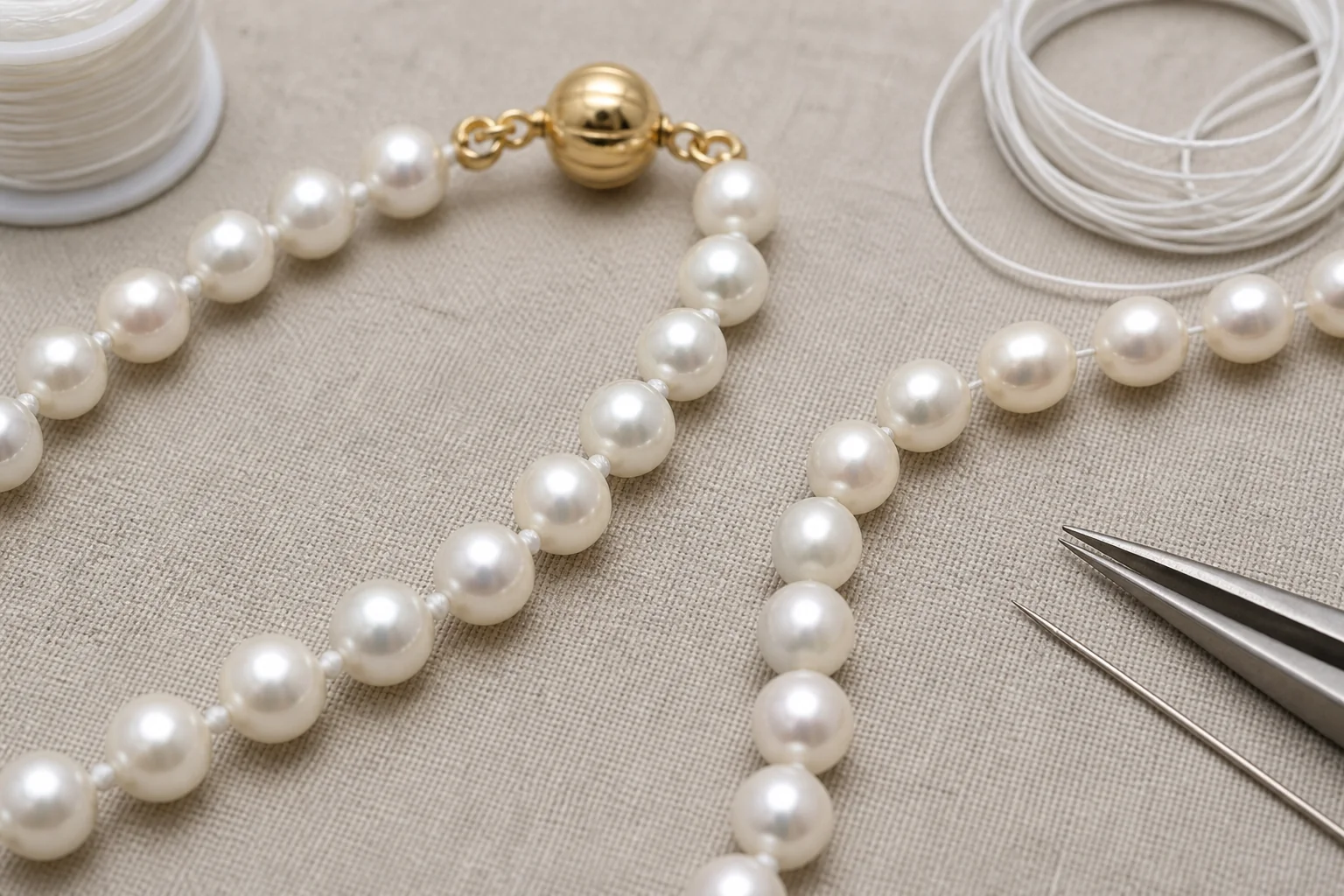
Choose material from the finished product requirement
Start with the product rather than a universal claim about the best stringing material. A classic knotted necklace, a small-pearl choker, a multi-strand bracelet and a fashion design with metal spacers impose different demands. Define the intended drape, pearl size and weight, hole diameter, finished length, knotting pattern, clasp and target use. The material must work as part of that system, including the end connection and any adhesive or crimp component.
Ask the supplier to identify the material by manufacturer or controlled internal code, construction, nominal diameter and color. Generic descriptions such as premium thread are difficult to verify and impossible to reorder consistently. Approve the complete assembly, not a loose spool sample. Two cords with similar diameter can produce different knot size, flexibility and surface appearance once they pass through the same drilled pearls.
Evaluate silk for traditional knotted strands
Silk is valued for a soft hand and traditional association with fine pearl necklaces. It can produce compact knots and a fluid drape when the cord size, pearl holes and maker technique are compatible. Buyers should specify the approved cord, color, number of strands if applicable, knot placement and finishing method. Natural fiber should not be presented as maintenance-free; care instructions and inspection of wear remain important for the finished product.
Do not select silk by tradition alone. Very small holes may limit the usable cord or number of passes, while a heavy layout may require a different construction decision. A sample should be conditioned and worn or flexed enough to reveal whether the strand settles to the intended length. Record the accepted drape and knot appearance because a new knotting tension can change both the look and the finished measurement.
Evaluate synthetic cord for consistency and design flexibility
Nylon and other synthetic cords are available in many constructions, diameters and colors. They can be useful when the product needs consistent supply, a particular color, compact knots or resistance appropriate to the intended design. The word nylon alone is not a specification. Record the exact cord code and confirm that the approved sample uses the same material production will use.
Check how the cord behaves at drilled edges, knots and clasp transitions. A cord that feels strong before assembly can still be unsuitable if it abrades at a rough hole or creates oversized knots. Examine the sample after repeated gentle flexing and function checks defined by the buyer. Avoid unsupported lifetime or waterproof claims; describe the material and care on the basis of supplier documentation and the finished product's verified performance.
Use flexible jewelry wire only with a controlled assembly
Flexible jewelry wire can support unknotted strands, mixed-material designs and some components where a cord knot is not the intended connection. Its structure, diameter, coating, termination and bend radius affect the result. The buyer should approve the exact wire and the full end construction, including crimps, covers, guards, jump rings and clasp. Substituting one wire or crimp size can change both function and appearance.
Inspect the finished strand for unwanted stiffness, kinks, exposed wire and poor transitions at the clasp. Confirm that the wire passes through the pearl holes without forcing, scraping or enlarging them. Where the design bends tightly, assess the actual assembled sample rather than relying only on a nominal strength claim. Wire does not eliminate the need for workmanship controls or consumer care instructions.
Control knotting, holes and finished length together
Individual knots can separate pearls, influence drape and limit movement if a strand breaks, but they also add length and require consistent placement. Specify whether every pearl is knotted, which sections are unknotted, the acceptable knot appearance and the treatment of the first and last pearls. For designs without individual knots, define spacer, tension and end rules so production does not improvise.
Hole diameter and edge quality are critical. The approved cord or wire must pass without excessive force, while the finished knot or component must remain secure. Record hole size and centering requirements in the pearl specification, then measure the finished length after the assembly has settled under the agreed condition. A change in cord diameter, knot tension or pearl count should trigger a new sample or documented approval.
Build a repeatable production and inspection record
The bill of materials should identify the exact stringing material, approved alternates if any, clasp and end components. The workmanship sheet should show threading direction, knot pattern, end finish and prohibited conditions such as frayed cord, exposed wire, loose knots or sharp crimp edges. Give the sample and document a revision, then require written approval for substitutions.
Inspection should combine visual review, dimensions and agreed functional checks. Examine representative pieces from the lot for drape, knot consistency, clasp transition, finished length and damage around drill holes. If the product is intended for repeated wear, the buyer can define a documented flex or handling procedure for development and production verification. Keep claims proportional to what was actually tested and provide care instructions consistent with pearl sensitivity.
Procurement decision table
| Material | Typical design fit | Specification focus |
|---|---|---|
| Silk | Traditional knotted necklaces with soft drape | Cord code, diameter, color, knots and end finish |
| Synthetic cord | Knotted or specialty constructions needing repeatable options | Exact material, abrasion points, knot size and care claims |
| Flexible jewelry wire | Unknotted and mixed-component designs | Wire construction, diameter, crimps, guards and bend behavior |
| Multiple-material assembly | Designs with cord, chain or spacer transitions | Every interface, component and approved sequence |
Buyer checklist
- [ ] Define the product, intended drape and use before selecting material.
- [ ] Record the exact material code, diameter, color and construction.
- [ ] Confirm compatibility with pearl-hole diameter and edge quality.
- [ ] Specify knots, spacing, tension and end connections.
- [ ] Approve the full assembled sample, not only the loose material.
- [ ] Measure finished length after the assembly settles.
- [ ] List visible and functional defects for inspection.
- [ ] Require approval before changing thread, wire, crimps or technique.
Frequently asked questions
Is silk always the best material for stringing pearls?
No. Silk can suit traditional knotted strands, but the correct choice depends on hole size, pearl weight, drape, construction, use and the approved finished sample.
Can freshwater pearls be strung on jewelry wire?
They can in a suitable design. The exact wire, coating, diameter, end components, bend behavior and hole compatibility must be approved as a complete assembly.
Does knotting change necklace length?
Yes. Knot size, tension, pearl count and settling affect finished length, so construction and length tolerances should be specified and inspected together.
What should a wholesale order say about thread?
Identify the material or controlled code, diameter, color, number of strands, knot pattern, end finish, approved sample and prohibited substitutions.
Related freshwater pearl buying guides
Sources and official references
Use these primary references together with the written product specification and destination-market professional advice.
Turn this guide into a purchase-ready specification
Send Tony Ren your target pearl product, quality tolerances, quantity, packaging and destination. We can discuss current-batch evidence, samples and a clearly scoped quotation.