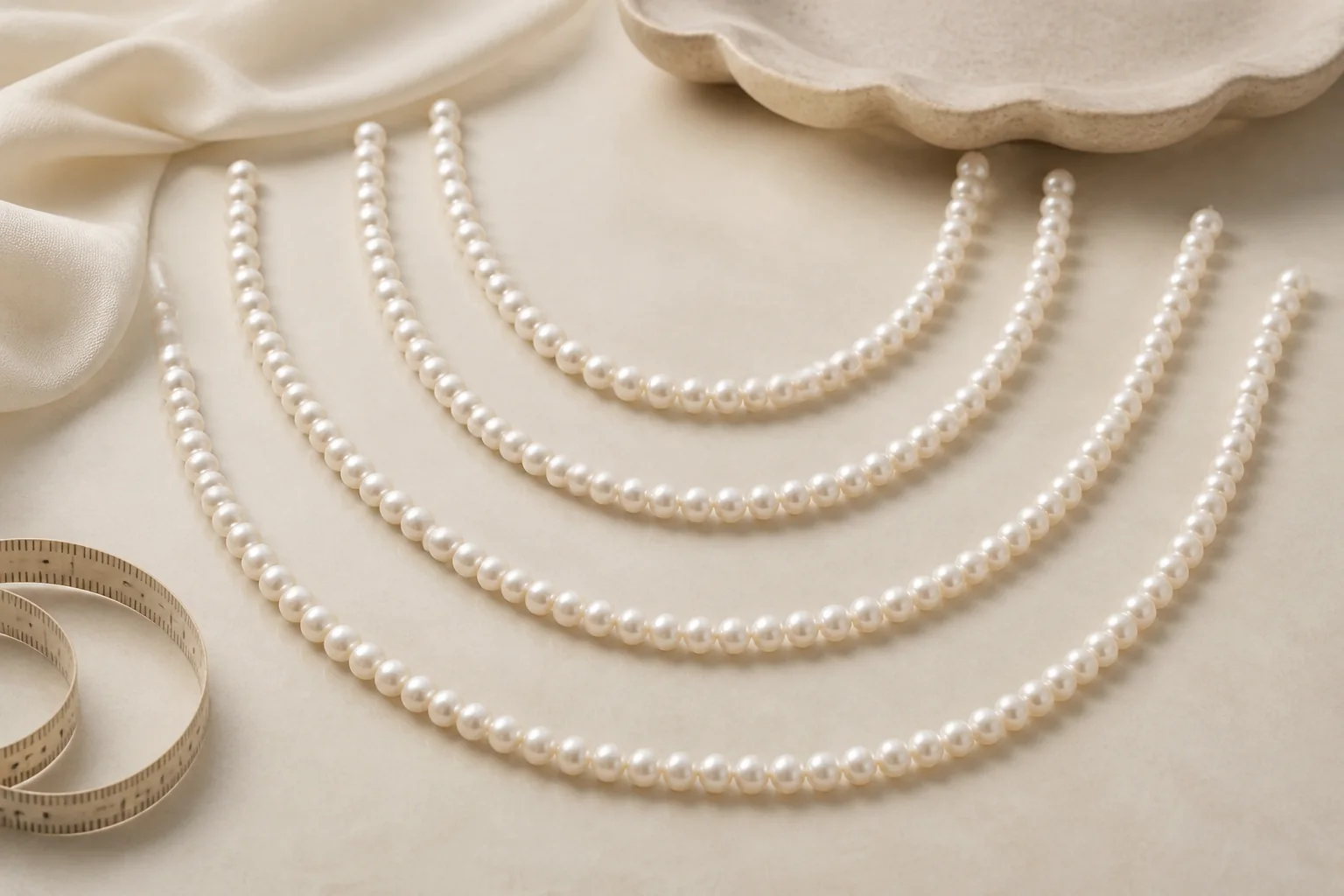
Define the fit range the extender must provide
Start with the base necklace length and target wearable range. A chain described as five centimeters long may provide less than five centimeters of usable adjustment if the clasp cannot enter the first or last links, if a charm occupies part of the chain, or if the connection geometry folds against the final pearl. State minimum and maximum closed lengths using the same measurement endpoints as the base necklace specification.
Describe adjustment increments. Fine links can provide small changes but may be harder to operate or incompatible with the clasp hook. Larger links can be easier to engage but create coarser fit steps and a different visual scale. Approve the actual clasp-and-chain combination with the selected pearl size. Do not rely on a supplier's generic chain length or a close-up photograph that omits the worn position.
Choose link geometry for clasp compatibility
Specify chain style, link dimensions, wire or section dimensions where relevant, orientation and usable openings. The clasp must enter and release each intended link without scraping, jamming or requiring excessive force. Check whether plating reduces the opening enough to change function. If only selected links are intended for closure, identify them visually or in the drawing rather than implying that every decorative link is usable.
Review the transition from pearls to chain. The connector should keep thread away from sharp metal edges and allow the chain to move without twisting the final pearl. State the jump ring or end fitting, material, finish and closure. A chain that passes a desk inspection can still rotate awkwardly when the necklace is worn, so fit approval should include front, side and back views.
Control the end charm and visual balance
An extender end may use a logo tag, small cultured pearl, bead or plain terminal. Record the item, size, orientation, attachment and required markings. Its weight changes how the unused portion hangs and can pull a light clasp toward the front. Compare the shortest and longest settings to ensure the tail remains intentional, does not tangle excessively and does not strike pearl surfaces during normal movement.
If a pearl charm is used, specify its cultured-pearl type, size range, shape and visual tolerance separately from the main necklace. The charm may not match the strand exactly, but the allowed relationship should be approved. Keep metal components isolated from pearl surfaces where practical. Do not describe a logo tag as a material hallmark unless the marking and claim are supported under the applicable market rules.
Document metal, finish and component identity
List chain, rings, clasp and charm in the bill of materials. State metal information and finish required by the buyer, but distinguish supplier declarations from verified claims. Visual inspection can compare color, gloss and surface condition; it cannot prove alloy composition or plating thickness. Obtain suitable evidence and destination-market advice for regulated material claims.
Color matching should be evaluated as an assembly. Gold-color chain, clasp and rings from different suppliers can show visible differences even when each is individually acceptable. Approve the range under consistent light and retain component references. Require written change control because a substitute chain with the same color name can alter link opening, weight, finish and fit.
Inspect adjustment function and workmanship
During inspection, close the clasp at the shortest, middle and longest intended positions. Confirm link access, secure engagement, smooth release and the measured finished lengths. Look for open rings, sharp ends, solder or plating irregularities, twisted chain, damaged links and charm misorientation. Use gentle cycles defined in advance; do not invent a high cycle count or force during routine inspection.
Record findings by component and effect. A cosmetic mark inside the approved boundary differs from a link the clasp cannot engage or an open connection that can release the necklace. If formal functional or load testing is required, define the fixture, sample quantity and acceptance rule in the quality plan. Retain tested samples separately when the procedure could change or damage them.
Prepare packaging and customer-facing dimensions
Secure the unused extender so it cannot wrap around the strand, rub the cultured pearls or puncture inserts. The retail pack should show the necklace neatly at one defined setting while allowing warehouse staff to verify the correct chain. Test how the charm and chain move under handling and transport, then photograph the approved pack-out for assembly instructions.
Customer copy should state the base length and adjustment range clearly, for example a nominal necklace length plus an extender range, using measurements supported by the product. Avoid implying that fit is identical for every wearer. Keep SKU data aligned across specification, product page, barcode record and packing list. If the extender design changes usable length, update both the product data and inspection method.
Procurement decision table
| Decision | Buyer specification | QC check |
|---|---|---|
| Usable range | Minimum and maximum closed lengths | Measure shortest and longest settings |
| Adjustment step | Links intended for clasp engagement | Close at representative positions |
| Link fit | Opening compatible with clasp geometry | Engage and release without binding |
| End charm | Item, size, orientation and attachment | Confirm balance and secure connection |
| Finish | Approved color and surface boundary | Compare all metal components together |
Buyer checklist
- [ ] State base necklace length and usable adjustment range.
- [ ] Identify every link intended for clasp engagement.
- [ ] Record chain style, link dimensions and component codes.
- [ ] Specify connector rings, end charm, metal and finish.
- [ ] Approve shortest, middle and longest worn positions.
- [ ] Inspect link access, release, sharp edges and open connections.
- [ ] Secure chain and charm against pearls inside the package.
- [ ] Align product-page dimensions with measured finished units.
Frequently asked questions
Is extender-chain length the same as usable adjustment?
Not always. Clasp access, terminal parts and link geometry can reduce the usable range, so specify and measure minimum and maximum closed lengths.
Can a lobster clasp engage every extender link?
Only if link openings and orientation allow it. Identify the intended usable links and validate the actual clasp-chain combination.
Should an extender charm match the necklace pearls?
The relationship should be approved, but exact identity is unrealistic for cultured pearls. Define the charm's own size, shape, color and quality boundaries.
How should an extender be packed?
Retain the loose chain and charm so they do not tangle with the strand, rub pearl surfaces or damage packaging during transport.
Related pearl necklace buying guides
Sources and official references
Use these primary references together with the written product specification and destination-market professional advice.
Turn this guide into a purchase-ready necklace specification
Send Tony Ren your target pearl necklace design, dimensions, quality tolerances, quantity, packaging and destination. We can discuss current-batch evidence, samples and a clearly scoped quotation.