Create inventory records at the level customers actually buy
A useful SKU must distinguish every attribute that changes demand, substitution or replenishment. For pearl jewelry this can include product type, pearl size and shape, bodycolor, metal, plating color, length, finding, packaging and sales channel. Do not merge white and lavender, silver-tone and gold-tone, or two necklace lengths simply because they share a design. If buyers will not accept them interchangeably, the inventory system should not treat them as one pool.
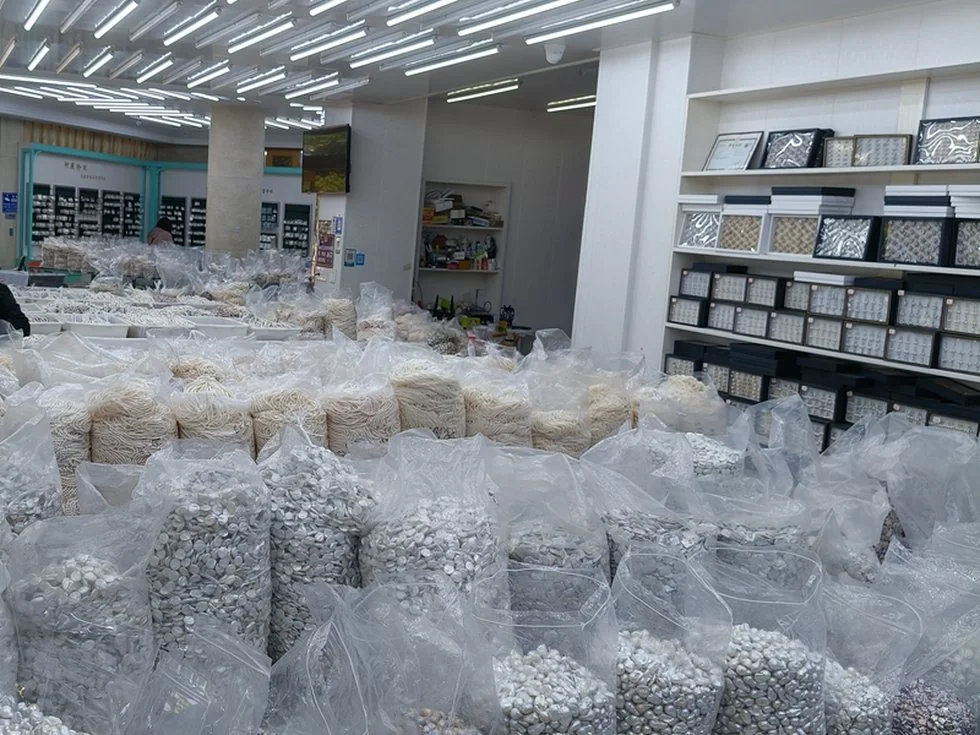
Keep production or material lots beneath the SKU. Two lots may meet the same specification yet show visible differences in overtone, luster or shape distribution when displayed together. Record on-hand quantity by lot and status, then use allocation rules to avoid mixing an order accidentally. Finished goods, loose pearls, semi-finished components and packaging are separate inventory layers. Visibility at each layer reveals whether a shortage comes from pearl material, findings, assembly capacity or a branded box.
Measure demand and replenishment as distributions, not averages alone
Collect order history by SKU, date, channel, customer type and promotion. Separate true demand from stockout-censored sales, samples, replacements and internal transfers. Note seasonality, launch effects and one-time wholesale orders that should not define the normal forecast. An average can hide volatility: two SKUs with the same annual units may need different buffers when one sells steadily and the other moves in irregular project-sized orders.
Measure replenishment from approved order release to usable receipt, not only factory production days. Include material confirmation, sampling or batch approval, production, inspection, booking, transport, customs, receiving and quality release. Track both typical and variable lead time. If incoming goods spend days in inspection or quarantine, that period is part of availability planning. Supplier promises, purchase-order dates and actual milestone history should be compared so the safety-stock model uses evidence rather than optimistic assumptions.
Choose safety stock from variability and service priorities
Safety stock protects against uncertainty in demand and replenishment. It is different from cycle stock, which supports normal ordering or production between replenishments. ASCM notes that safety stock should reflect demand variability during lead time and that service targets can differ by product group. A core bridal stud may justify stronger protection than an experimental statement necklace, while a high-value slow mover may warrant a responsive replenishment plan instead of deep finished-goods inventory.
Use a qualified planner to select a method appropriate to the data and operating model. A common structure is expected demand during replenishment plus a buffer tied to variability and the selected service objective, but assumptions must be documented. Do not copy a fixed weeks-of-supply or percentage rule across all SKUs. The target should recognize stockout impact, gross-margin exposure, substitutability, shelf and style risk, supplier flexibility, minimum quantities and capital constraints without pretending that any service level guarantees availability.
Add controls for pearl batches, components and reorders
Natural material variation creates a risk that standard units cannot show. When continuity matters, retain an approved reference and decide whether to reserve compatible pearl material for repeat production. A material reserve is not the same as finished-goods safety stock; it still needs findings, assembly, inspection and packaging before sale. Label ownership, quantity, quality range and permitted use, and review it for aging or damage. Do not promise indefinite visual matching from an unidentified mixed bin.
Map shared components across the assortment. One clasp, post, chain or neutral box may support several SKUs and provide flexible protection, while a printed insert or custom color box may become obsolete quickly. Decide where postponement is possible: holding compatible loose pearls and common findings can reduce finished-style risk if assembly capacity is dependable. Conversely, fast-selling finished items with long assembly queues may need completed stock. The buffer should sit at the stage that best absorbs the actual uncertainty.
Set reorder triggers using available, committed and pipeline stock
A reorder view should include usable on-hand stock, confirmed customer allocations, approved open purchase orders, realistic arrival dates and safety-stock target. Exclude quarantine, damaged pieces, unapproved batches and display samples unless policy allows their use. Pipeline inventory is not available merely because a purchase order exists. Apply milestone confidence so a late or unconfirmed order does not suppress a needed replenishment signal.
Define ownership for exceptions. When projected available stock falls below the trigger, the planner may release an order, expedite, substitute, reallocate or change the sales promise. The right action depends on margin, customer priority, batch compatibility and launch timing. Record overrides and their outcomes; repeated expedites may indicate an understated lead-time distribution, while repeated cancellations may show forecast bias. Inventory rules should reveal decisions, not automate them without context.
Review service, aging and risk in one planning cycle
Run a regular sales, inventory and operations review that connects demand, launches, supplier capacity, open orders and cash. NIST recommends coordination of forecasting, demand and operations planning as part of supply-chain visibility. Review stockouts, fill rate, forecast error, lead-time performance, aged inventory, inspection holds and write-offs by SKU role. A high total inventory value can coexist with poor availability if capital is trapped in the wrong sizes or styles.
Use lifecycle rules. New products need a test quantity and explicit learning period; core products need stable targets and exception monitoring; seasonal items need a sell-through plan; declining items need controlled final buys and disposition. Recalculate after a supplier change, MOQ change, material shift, channel launch or major demand event. Preserve decisions and assumptions so the team knows why a buffer exists and can reduce it when the underlying risk disappears.
Procurement decision table
| SKU situation | Suggested stock posture | Primary evidence | Review focus |
|---|---|---|---|
| Stable core item with repeat demand | Cycle stock plus evidence-based safety stock | Demand and end-to-end lead-time history | Service, forecast error and supplier reliability |
| New or unproven design | Small pilot with defined replenishment option | Customer tests, preorder signals and supplier flexibility | Conversion, returns and early sell-through |
| High-value slow mover | Low finished stock; consider material or component option | Stockout impact, substitution and capital exposure | Aging, opportunity cost and order response time |
| Seasonal or event-led SKU | Time-phased buy with exit plan | Event calendar, prior analogs and cutoff dates | Sell-through and cancellation risk |
| Batch-sensitive continuity item | Segregated compatible lot or documented reserve | Retained sample, batch data and expected reorders | Visual continuity, reserve aging and allocation |
Buyer checklist
- [ ] Define SKUs by every attribute that changes demand or substitutability.
- [ ] Track pearl lot and inventory status beneath the sellable SKU.
- [ ] Clean demand history for stockouts, samples, promotions and one-time orders.
- [ ] Measure replenishment through receiving and quality release, not factory time alone.
- [ ] Separate cycle stock, safety stock, pipeline, quarantine and obsolete inventory.
- [ ] Set differentiated service priorities instead of one universal buffer percentage.
- [ ] Place buffers at finished goods, material or shared-component stages intentionally.
- [ ] Review overrides, aging, forecast error and lead-time performance on a fixed cadence.
Frequently asked questions
What percentage of pearl jewelry inventory should be safety stock?
There is no universal percentage. The target should reflect demand and lead-time variability, SKU importance, substitution, supplier flexibility, stockout cost and capital risk.
Is stock on an open purchase order available inventory?
It is pipeline inventory, not usable stock. Include it with a realistic arrival and quality-release probability, and keep unconfirmed or delayed orders from masking shortages.
Should a buyer hold finished jewelry or loose pearl material?
It depends on where uncertainty sits. Material and shared components preserve flexibility when assembly is responsive; finished goods protect service when production or approval lead time is long.
How should different pearl batches be stored in the system?
Keep lot identity and status visible under the SKU, with retained references where continuity matters. Do not mix lots until visual compatibility and allocation rules are approved.
Related freshwater pearl buying guides
Sources and official references
Use these primary references together with the written product specification and destination-market professional advice.
Turn this guide into a purchase-ready specification
Send Tony Ren your target pearl product, quality tolerances, quantity, packaging and destination. We can discuss current-batch evidence, samples and a clearly scoped quotation.