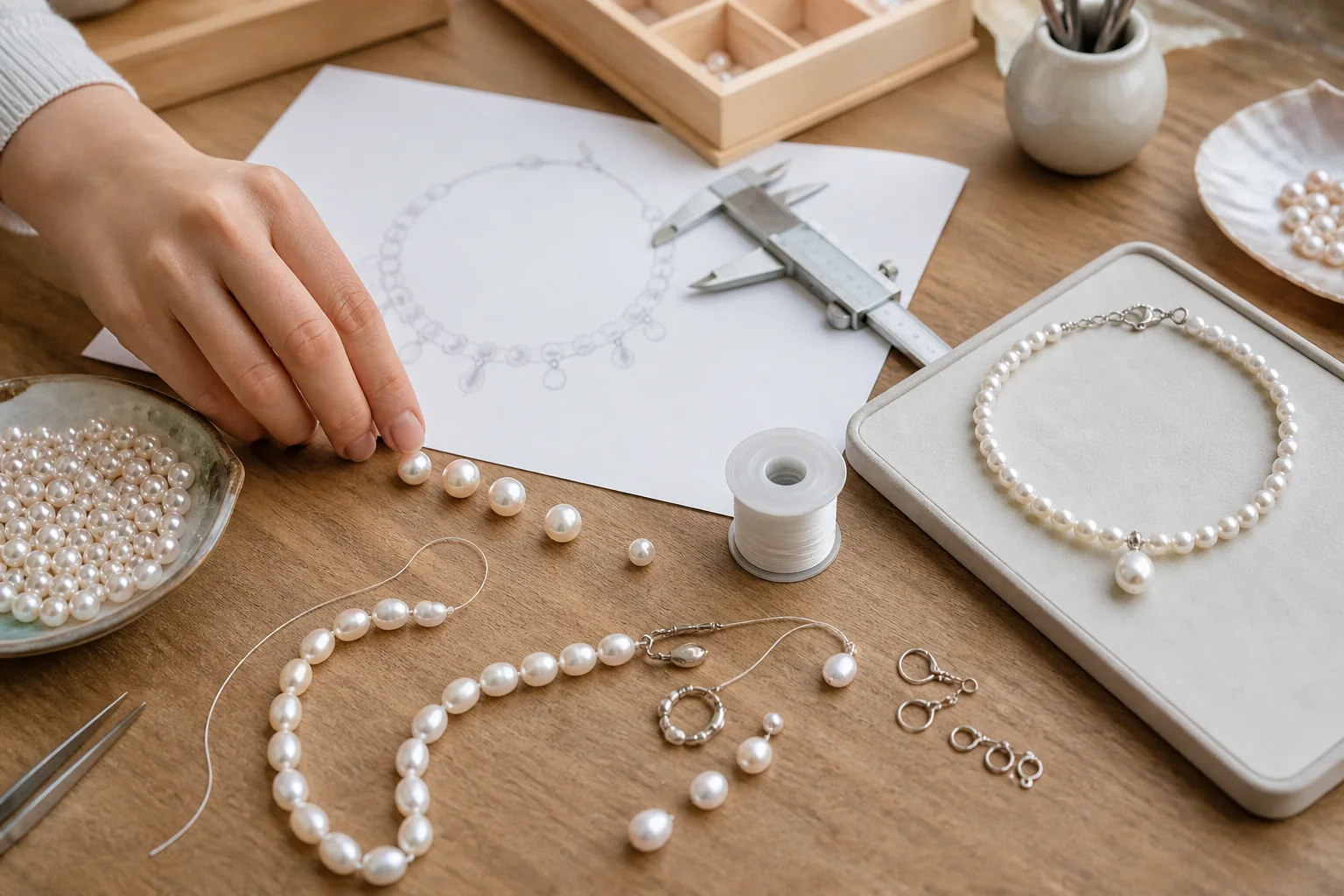
Define the commercial brief and launch gate
Start with the customer, channel, target retail position, launch assortment and required in-stock date. Describe why each SKU exists and how it differs from current products. Set a target cost structure, but keep pearl quality, metal, construction, packaging, freight and inspection visible rather than forcing everything into one unexplained unit price. Name the person who can approve product, brand, compliance and spending decisions so samples do not wait in an undefined review queue.
Create a gate for product-definition complete. Before sourcing begins, decide pearl type, size, shape, color direction, quality priorities, design dimensions, metal direction, packaging level and initial quantity range. Mark unknowns that suppliers should help solve. Avoid launching too many variants before the core construction is proven. A focused assortment reduces sample combinations, matching complexity, barcode setup, photography and inventory risk.
Qualify suppliers and compare equivalent quotes
Send the same brief to a short list of suppliers and request quotations tied to the same assumptions. Ask who performs pearl sorting, drilling, assembly, plating, packaging and inspection, and which processes are external. Review communication discipline, sample terms, capacity, quality records and ability to provide current batch evidence. A low price is not comparable when it excludes packaging, testing, tooling, labeling or a required quality level.
Protect confidential designs and brand assets appropriately. Clarify ownership and permitted use of drawings, molds, artwork, photography and packaging. If overseas manufacturing is involved, consider intellectual-property strategy before disclosure and use suitable professional advice. Supplier qualification should end with a documented decision and risk list, not merely a favorite sample image. Keep a backup path for critical components or an alternative supplier if the launch window is inflexible.
Plan sample rounds as decision cycles
Use a staged sample plan: material or style options, first finished sample, revised sample, and production-ready approval when needed. Give each round a specific question. An early sample may compare pearl size and silhouette; a later one should prove construction, comfort, dimensions and packaging. Send consolidated, numbered feedback with photographs and measurements. Scattered comments from multiple reviewers create contradictory instructions and extend the timeline.
Allow time for shipping samples, internal wear tests, photography review and decision meetings. Cultured-pearl batches may require current batch confirmation close to production, even after design approval. When a sample is accepted, identify and retain it, freeze the specification revision and record remaining conditions. Do not place a bulk order on an attractive prototype while packaging, metal claims, barcode data or inspection criteria remain undefined.
Develop packaging, data and compliance in parallel
Packaging should not wait until jewelry approval. Develop box or pouch, holder, care card, barcode label, artwork and shipping configuration alongside the product, then test final fit. Create the product-data record for SKU, variant, title, dimensions, materials, barcode and pack quantity. Confirm which changes require a new identifier under the brand owner's GS1 policy. Reserve time for artwork proofing, print samples and corrections.
Identify destination-market and marketplace requirements early. Pearl descriptions, treatment disclosures and metal claims must be accurate. Determine whether laboratory tests, supplier declarations or specific labels are needed and connect evidence to the production materials. Regulations and platform policies vary, so use qualified advisers rather than a generic checklist as legal approval. Late compliance findings can require material, packaging or listing changes after production has already started.
Freeze the order and manage production gates
The purchase order should reference the final specification, approved sample, quantity by SKU, packaging, artwork, tests, inspection, Incoterms rule and named place, payment terms and target milestones. Confirm pearl batch and component availability before treating the schedule as firm. A supplier's production estimate may start only after deposit, artwork approval, material receipt or another condition; state what starts the clock and what information is still outstanding.
Use milestone updates that show material readiness, component completion, assembly, packing and inspection readiness. Require change requests for substitutions or timing threats. If a batch cannot match the approved range, decide before assembly whether to sort, revise, separate lots or wait. Avoid solving schedule pressure by silently widening quality tolerances. A controlled scope reduction or phased launch is more transparent than accepting an undocumented product change.
Include inspection, freight, receiving and replenishment
Schedule pre-shipment inspection only when the order will be sufficiently complete and packed. Build time for report review, corrective action and reinspection rather than placing inspection on the day before a fixed pickup. Confirm freight booking, documents, insurance responsibility and realistic transit range with the forwarder. Incoterms allocate certain responsibilities and risk, but they do not replace a clear sales contract or carrier arrangement.
The launch plan ends when saleable inventory is received, reconciled and ready, not when the factory finishes production. Allow for customs, warehouse appointment, count and quality check, listing data, photography, content review and replacement handling. Retain approved samples and final files for replenishment. After launch, review returns and customer feedback, then forecast reorders early because compatible cultured-pearl batches and custom packaging may require fresh confirmation.
Procurement decision table
| Gate | Exit criteria | Main schedule risk |
|---|---|---|
| Brief approved | Customer, SKU scope, quality priorities and in-stock date are defined | Unresolved assortment expansion |
| Supplier selected | Equivalent quote, capability, responsibilities and risks are documented | Hidden external processes |
| Sample frozen | Numbered specification and retained production-ready sample are approved | Late design feedback |
| Packaging ready | Fit, artwork, barcode data and parcel design are approved | Print correction or identifier error |
| Production released | Materials, order terms, tests and milestones are confirmed | Pearl batch or component shortage |
| Shipment released | Inspection, documents, booking and corrective actions are complete | No time for reinspection |
| Inventory ready | Receipt, count, quality, listing and fulfillment data are reconciled | Factory-complete date mistaken for launch date |
Buyer checklist
- [ ] Set the in-stock date, launch scope, decision owners and product-definition gate.
- [ ] Compare supplier quotes using one controlled brief and complete cost assumptions.
- [ ] Plan sample rounds by decision purpose, shipping time and internal review time.
- [ ] Develop packaging, product data, barcodes, claims and testing in parallel.
- [ ] Freeze a numbered specification and approved sample before bulk production.
- [ ] Confirm material availability and define the event that starts production lead time.
- [ ] Reserve time for inspection findings, corrective action, freight and receiving.
- [ ] Retain final records and plan compatible pearl material for replenishment.
Frequently asked questions
How long does a private-label pearl jewelry launch take?
There is no reliable universal duration. Timing depends on sample rounds, pearl and component availability, testing, packaging, production, inspection, freight and receiving. Build a product-specific critical path.
When should packaging development start?
Start alongside product sampling. Final fit requires the approved jewelry, but artwork, holders, barcode data and shipping design can be developed earlier.
Can bulk production begin before the final sample is approved?
That increases change and quality risk. If any limited early activity is authorized, document exactly what is approved, what remains open and who bears the consequence of later changes.
What date should the launch plan work backward from?
Use the required saleable in-stock date at the warehouse or fulfillment center, then include receiving and listing readiness rather than stopping at factory completion.
Related freshwater pearl buying guides
Sources and official references
Use these primary references together with the written product specification and destination-market professional advice.
Turn this guide into a purchase-ready specification
Send Tony Ren your target pearl product, quality tolerances, quantity, packaging and destination. We can discuss current-batch evidence, samples and a clearly scoped quotation.